
How Does Open Source Empower Businesses
What you'll learn
 Foundational Freedoms of Open SourceStrategic Business AdvantagesChallenges and ConsiderationsOpen Source for Training
For many, the term "open source" immediately conjures images of "free software." While cost can indeed be a significant factor, especially for businesses looking to optimize budgets, equating open source solely with zero price tags is a fundamental misunderstanding. In the context of business, embracing open source software (OSS) goes far deeper than financial savings; it represents a strategic shift in how technology is acquired, developed, and maintained, offering a unique set of opportunities and responsibilities that can profoundly impact an organization's agility, innovation, and long-term sustainability. Understanding its true meaning is paramount for businesses exploring or already utilizing this powerful paradigm.
The Foundational Freedoms of Open Source
At its core, open source isn't just about the availability of source code. It's defined by a set of freedoms granted to the user, ensuring transparency, collaboration, and control. These freedoms are the bedrock upon which the entire open source ecosystem is built and are crucial for businesses to grasp.
- The Freedom to Run the Program for Any Purpose: This means businesses can deploy the software in any way they see fit, without restrictive licensing agreements dictating use cases or environments.
- The Freedom to Study How the Program Works and Adapt It to Your Needs: Access to the source code allows businesses to understand its inner workings, debug issues internally, and tailor the software to their specific operational requirements. This is a game-changer for customization.
- The Freedom to Redistribute Copies: Businesses can share the software with others, fostering collaboration and enabling widespread adoption within their organization or even across their ecosystem.
- The Freedom to Distribute Copies of Your Modified Versions to Others: This is where true innovation often happens. Businesses can improve the software, fix bugs, or add new features and then contribute those changes back to the community or use them exclusively within their enterprise.
These freedoms collectively empower businesses with unprecedented control over their software stack, moving away from proprietary vendor lock-in towards a more adaptable and customizable technological landscape.
Strategic Advantages Beyond Cost Savings
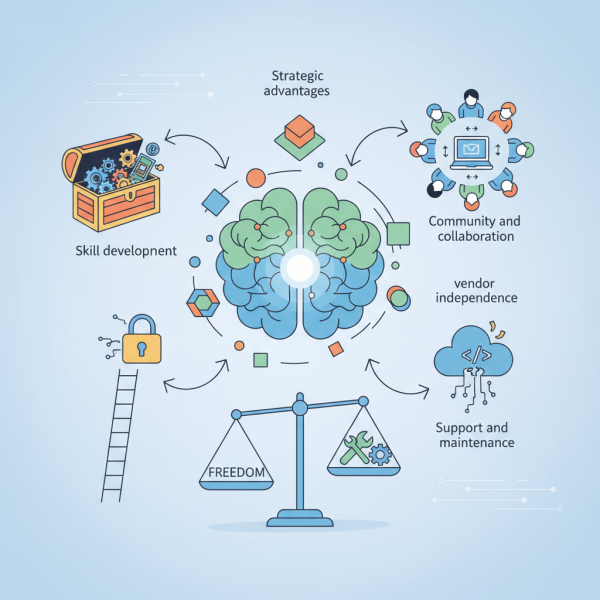
While reduced licensing fees are often the initial draw, the strategic advantages of open source for businesses extend much further.
First, Flexibility and Customization are paramount. Unlike closed-source alternatives, businesses can modify OSS to precisely fit their unique workflows and integrate it seamlessly with existing systems. This adaptability reduces the need for expensive, off-the-shelf solutions that might only partially meet requirements, leading to more efficient operations.
Second, Innovation and Rapid Development thrive in an open source environment. The collaborative nature of open source projects means businesses can tap into a global talent pool, benefiting from contributions and insights from developers worldwide. This often leads to faster development cycles, quicker bug fixes, and continuous feature enhancements, propelling businesses ahead of competitors.
Third, Enhanced Security and Transparency are significant benefits. With source code publicly available, a vast community of developers can scrutinize it for vulnerabilities. This collective oversight often leads to faster identification and patching of security flaws compared to proprietary software, where vulnerabilities might remain hidden for longer periods. Businesses gain a deeper understanding of the software they deploy.
Fourth, Vendor Independence is a powerful advantage. Open source minimizes the risk of vendor lock-in, as businesses are not tied to a single provider for support, updates, or future development. This creates a competitive market for support services and allows businesses to switch providers or manage aspects internally as needed, maintaining control over their technology destiny.
Finally, Community Support and Collaboration offer an invaluable resource. Large open source projects boast active communities that provide extensive documentation, forums, and direct peer support. This communal knowledge base can be a vital asset for troubleshooting, learning best practices, and staying abreast of developments without always relying on formal paid support.
Navigating the Nuances: Challenges and Considerations
Despite its many benefits, adopting open source is not without its considerations. Businesses must approach it with a clear understanding of potential challenges.
One key area is Support and Maintenance. While community support is robust, businesses requiring guaranteed service level agreements (SLAs) and dedicated technical assistance may need to invest in commercial support contracts from third-party vendors who specialize in particular open source solutions. This shifts the support model from the software vendor to a service provider.
Another factor is Integration Complexity. While open source offers flexibility, integrating various OSS components into a coherent enterprise system can require significant technical expertise and careful planning. Compatibility between different open source projects and proprietary systems needs to be thoroughly assessed.
Furthermore, Internal Skill Gaps can emerge. To fully leverage the customization and development freedoms of open source, businesses often need in-house developers or IT staff with the skills to work with specific open source technologies. Investing in training, such as "Open Source Software Training," becomes crucial to empower teams to utilize and contribute effectively.
Finally, Licensing Awareness is critical. While "open" implies freedom, different open source licenses (e.g., GPL, MIT, Apache) have varying terms regarding redistribution, modification, and attribution. Businesses must understand these nuances to ensure compliance and avoid potential legal issues, especially when distributing modified versions.
Leveraging Open Source for Training and Development
For organizations focused on Open Source Software Training, the very nature of open source offers unparalleled opportunities. It provides a living laboratory for learning, allowing trainees to:
- Gain Hands-On Experience: Students can download, install, modify, and experiment with real-world software, gaining practical skills that are directly transferable to industry.
- Explore Source Code: The ability to study the underlying code demystifies software development and enhances understanding of programming principles, design patterns, and debugging techniques.
- Participate in Communities: Engaging with open source communities teaches valuable collaboration skills, problem-solving, and how to contribute to a larger project, mirroring real-world software development environments.
- Build Portfolios: Contributing to open source projects allows trainees to build a public portfolio of their work, demonstrating their abilities to potential employers.
Open source becomes not just a tool, but an educational platform, fostering a deeper understanding and practical application of software development and IT operations.
Summary
In conclusion, "open source" for your business signifies far more than just free software. It embodies a philosophy of freedom, transparency, and collaboration that offers profound strategic advantages, including unparalleled flexibility, rapid innovation, enhanced security through community oversight, and vital vendor independence. While requiring careful consideration of support models, integration complexities, skill development, and licensing, the benefits of embracing open source are substantial. For businesses committed to continuous learning and technological empowerment, understanding and leveraging the true essence of open source is essential for sustained growth and competitive edge in today's dynamic digital landscape.
Comprehension questions
 What are the four foundational freedoms that define open source software?Name three strategic advantages open source offers businesses beyond cost savings.What are some key challenges or considerations businesses must address when adopting open source?How can open source software be leveraged effectively for professional training and development?