
Integrating a CDN for Open Source Web Projects
What you'll learn
 Content Delivery Network FundamentalsBenefits for Open Source ProjectsCDN Selection CriteriaPractical Integration Steps
For open source web software developers, delivering a fast, seamless experience to a global audience is paramount, often without the luxury of vast infrastructure budgets. This is precisely where a Content Delivery Network (CDN) becomes an indispensable tool. Integrating a CDN allows you to offload your static media assets – images, videos, CSS files, JavaScript, and more – to a geographically distributed network of servers, dramatically reducing latency and improving overall application performance for users worldwide.
Understanding the CDN Advantage
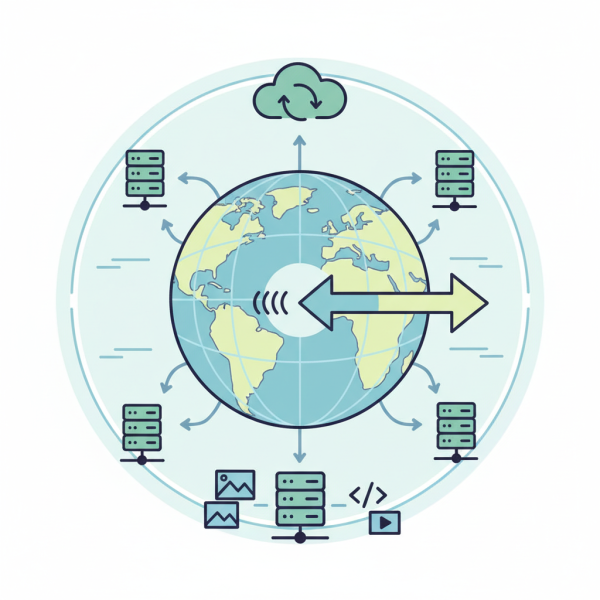
At its core, a CDN is a network of interconnected servers, known as Points of Presence (PoPs) or edge servers, strategically located in data centers across the globe. When a user requests an asset that is served via a CDN, the CDN intelligently routes that request to the nearest available edge server that holds a cached copy of the asset. This proximity significantly shortens the physical distance data has to travel, leading to lower latency and faster load times.
Think of it this way: instead of every user, regardless of their location, fetching a large image from your single origin server in, say, North America, a user in Europe would retrieve that same image from an edge server in Europe. This not only speeds up delivery for the end-user but also takes a considerable load off your primary server, allowing it to focus on dynamic content generation and backend processes.
Why Open Source Projects Benefit from CDNs
Open source projects often thrive on global collaboration and user bases. However, they frequently operate on lean budgets or shared hosting environments that may not offer optimal global reach or scalability. CDNs address several critical challenges for this community:
- Enhanced Performance: Directly impacts user experience by speeding up page loads, crucial for engagement and retention.
- Reduced Origin Server Load: By serving static assets from edge locations, your main server experiences less traffic, saving bandwidth and reducing processing strain. This can prevent costly scaling issues.
- Improved Reliability and Availability: If one edge server goes down, traffic can be rerouted to another healthy server, providing redundancy.
- Cost Efficiency: Many CDN providers offer generous free tiers or highly competitive pricing, making enterprise-grade performance accessible to open source initiatives.
- Scalability: CDNs automatically handle traffic spikes without requiring manual intervention on your origin server.
Choosing the Right CDN for Your Project
Selecting a CDN involves evaluating several factors pertinent to an open source project's needs:
- Cost Model: Look for transparent pricing, free tiers, or usage-based billing that aligns with your project's budget and anticipated traffic.
- Features: Beyond basic caching, consider DDoS protection, Web Application Firewall (WAF), image optimization, API access, and custom SSL certificate support.
- Integration Ease: How seamlessly does the CDN integrate with your existing development workflow, build tools, and deployment pipelines?
- Global Network Coverage: Evaluate the number and strategic placement of edge servers, especially if your target audience is geographically diverse.
- Caching Controls: granular control over caching rules, cache invalidation methods, and cache-control headers.
Practical CDN Integration Steps
Integrating a CDN typically involves a few core steps, often manageable for open source developers:
First, sign up with your chosen CDN provider and configure your domain. This usually involves updating your DNS records, most commonly by creating CNAME records that point your asset subdomains (e.g., assets.yourproject.org) to the CDN provider's infrastructure. This directs requests for those assets through the CDN.
Second, you need to update the URLs of your static assets in your HTML, CSS, and JavaScript files to point to the CDN. Instead of referencing /images/logo.png, you'd update it to https://cdn.yourproject.org/images/logo.png. For modern web projects, this process is often automated using build tools like Webpack, Gulp, or Grunt, which can automatically rewrite asset URLs during the build process.
Finally, understanding cache invalidation is crucial. When you update an asset, the CDN's edge servers might still serve the old cached version. Most CDNs provide mechanisms for instant cache purging or invalidation, ensuring your users always receive the latest version of your content. Implementing robust cache-control headers on your origin server is also vital for guiding the CDN on how long to cache specific assets.
Best Practices and Common Pitfalls
To maximize the benefits of your CDN, consider these best practices. Always serve assets over HTTPS to maintain security and avoid mixed content warnings. Implement content versioning (e.g., appending a hash or timestamp to filenames like main.css?v=12345) to facilitate reliable cache busting when new versions are deployed. Leverage proper Cache-Control headers on your origin server to instruct the CDN and browsers on how to cache your content effectively.
A common pitfall is incorrect cache configuration, leading to stale content being served or assets not being cached at all. Regularly monitor your CDN's performance metrics and logs. Another pitfall is not understanding the cost implications of egress bandwidth, especially with larger media files, so review your CDN provider's pricing carefully.
Summary
For open source web software developers, integrating a Content Delivery Network is a strategic move to significantly enhance application performance, reduce latency, and improve user experience globally. By offloading static media assets to a distributed network of edge servers, projects can benefit from faster loading times, reduced strain on origin servers, increased reliability, and scalable infrastructure. Carefully selecting a CDN, configuring DNS, automating asset URL rewriting, and adhering to best practices like proper caching and versioning are key to successfully leveraging this powerful technology.
Comprehension questions
 What is the primary benefit of using a CDN for open source web software developers?How does a CDN reduce latency for end-users?What are two key factors an open source project should consider when choosing a CDN provider?Describe one practical step involved in integrating a CDN into a web project.What is a common pitfall to avoid when configuring caching with a CDN?