
A Developer's Guide to User and SEO-Friendly URL Structures
What you'll learn
 Importance of User & SEO-Friendly PermalinksPrinciples of Effective Permalink DesignImplementation in Open Source ProjectsTechnical Considerations for Permalink Systems
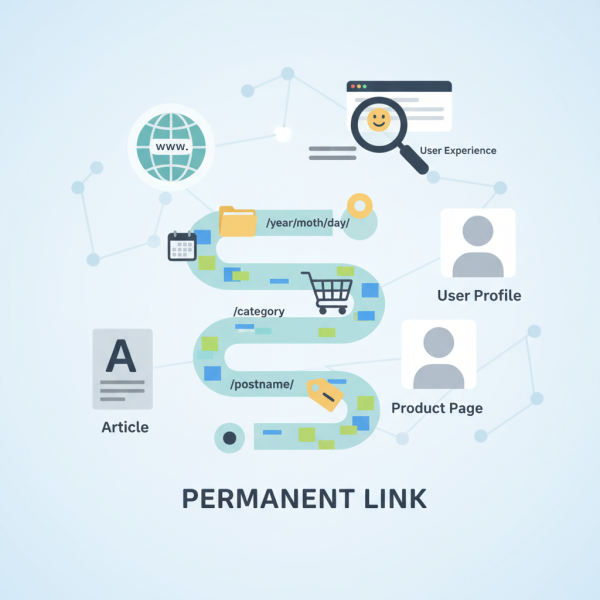
In the expansive realm of open-source web development, where flexibility and user control are paramount, the configuration of permalink structures stands as a critical decision point. Permalinks, or permanent links, are the unique URLs that point to individual pieces of content on your website, be it an article, a product page, or a user profile. Far from being a mere technical detail, the structure of these URLs significantly impacts both the user experience and your project's visibility in search engine results. Crafting URLs that are intuitive for humans and easily decipherable by search engine crawlers is an art that blends usability, accessibility, and robust SEO practices.
What are Permalinks and Why Do They Matter?
A permalink is essentially a static URL that remains unchanged over time, ensuring that content can always be found at the same address. Its permanence is key for reliable linking, sharing, and bookmarking. For users, a well-structured permalink provides immediate context about the content they are about to access, making it more memorable and trustworthy. Conversely, cryptic or overly long URLs can deter users and make content seem less professional.
From a search engine optimization (SEO) perspective, permalinks are a fundamental element. Search engines analyze URLs to understand the topic of a page and to determine its relevance to search queries. Keyword-rich, descriptive URLs can positively influence rankings, while confusing structures can hinder crawling and indexing efficiency. Moreover, consistent permalinks prevent issues like duplicate content and contribute to a better crawl budget allocation.
Principles of Effective Permalink Structures
Designing effective permalinks involves adhering to several core principles that balance technical efficiency with user and search engine friendliness:
- Readability and Predictability: URLs should be easy for humans to read and understand at a glance. They should provide a clear indication of the page's content. A user should be able to guess the content of a page just by looking at its URL.
- Keyword Inclusion: Incorporating relevant keywords into your permalinks can signal to search engines what the page is about, enhancing its relevance for specific queries. However, this should be done naturally and not forced, avoiding keyword stuffing.
- Conciseness: Shorter URLs are generally preferred. They are easier to remember, type, and share, and they look cleaner in search results. While descriptive, avoid excessive wordiness.
- Consistency: Maintain a consistent structure across your entire site. This helps users navigate predictably and aids search engines in understanding your site's architecture. Randomly changing formats can create broken links and SEO challenges.
- Hierarchical Structure (when appropriate): For sites with deep content hierarchies (e.g., categories and subcategories), reflecting this structure in the URL can be beneficial. It helps users understand where they are within the site and provides additional context for search engines.
Common Permalink Structures and Their Implications
Different content management systems and frameworks offer various permalink options. Let's explore some common patterns:
/%postname%/: This is often the cleanest and most recommended structure. For instance,example.com/configuring-permalinks/. It's highly readable, keyword-friendly, and concise. It's excellent for most blogs and content-focused sites./%category%/%postname%/: An example would beexample.com/development/configuring-permalinks/. This structure provides hierarchical context, which can be useful for sites with extensive categorization. It explicitly tells users and search engines the content's category./%year%/%monthnum%/%day%/%postname%/: Likeexample.com/2023/10/26/configuring-permalinks/. While good for news sites or very time-sensitive content, it can make URLs long and less evergreen. It explicitly timestamps the content, which might not always be desired./%id%/%postname%/: For example,example.com/123/configuring-permalinks/. The numeric ID ensures uniqueness and fast database lookups. While descriptive, the ID itself offers no semantic value to users or search engines, making it less ideal for pure SEO benefit.
Each structure carries trade-offs. While /%postname%/ is generally versatile, large, category-driven sites might benefit more from including category names. Developers should consider the typical content lifespan and organization of their project when deciding. The key is to choose a structure that best serves the content and its long-term discoverability.
Implementing Permalinks in Open Source Projects
For open-source web software developers, implementing a flexible permalink system is crucial. The core design should allow site administrators to easily configure their preferred URL format. This typically involves:
- User Interface for Configuration: Provide an admin panel setting where users can select predefined permalink structures or even define custom patterns using placeholders (e.g.,
%postname%,%category%). - URL Rewriting Engine: Leverage server-side URL rewriting mechanisms like Apache's
mod_rewriteor Nginx'srewritemodule. These directives translate user-friendly URLs into internal paths that your application understands, without requiring physical file changes. Frameworks often abstract this with their own routing systems. - Slug Generation and Sanitization: When content is created, automatically generate a "slug" (the user-friendly part of the URL, e.g., "configuring-permalinks") from the title. This process should sanitize the title by converting spaces to hyphens, removing special characters, and converting to lowercase. Ensure uniqueness, perhaps by appending a number if a slug already exists.
- Handling Changes with 301 Redirects: Content may move or slugs may be updated. Your system should facilitate permanent (301) redirects from old URLs to new ones. This preserves SEO value and prevents broken links, guiding both users and search engines to the correct location.
Technical Considerations for Developers
Beyond the user-facing configuration, developers must address several technical facets:
- Database Design: Store the generated slug and the chosen permalink pattern in your database alongside content. This allows the application to dynamically construct and resolve URLs.
- Routing Mechanisms: Modern web frameworks (e.g., Laravel, Django, Ruby on Rails) provide robust routing components that map URL patterns to specific controller actions or views. Integrating your permalink logic here is essential.
- Performance Implications: While generally minor for typical traffic, extremely complex or poorly optimized rewrite rules can add overhead. Test the performance impact of your chosen rewrite strategy.
- Internationalization (i18n): If your project supports multiple languages, consider how permalinks will be handled. This might involve language prefixes (e.g.,
/en/post/) or language-specific slugs. Ensure slug generation properly handles non-ASCII characters or provides transliteration options. - Canonical URLs: Implement canonical tags in your HTML
. This tells search engines the preferred version of a page when multiple URLs might lead to the same content (e.g., with or without trailing slashes, or with query parameters), preventing duplicate content penalties.
Summary
Configuring permalink structures is a foundational task in developing any web software. It requires a thoughtful approach that prioritizes both the human user experience and the technical demands of search engine optimization. By adhering to principles of readability, conciseness, and consistency, and by providing flexible implementation options, open-source developers can empower their users with web projects that are not only powerful but also highly discoverable and pleasant to navigate. Proper slug generation, URL rewriting, and intelligent redirect management are crucial technical considerations to ensure long-term success and maintain a healthy SEO profile for any web application.
Comprehension questions
 What are the two primary benefits of a well-structured permalink for a web project?List three key principles for designing effective permalink structures.Why is 301 redirection critical when permalinks change or content moves?What role do URL rewriting engines like Apache's mod_rewrite play in permalink implementation?