
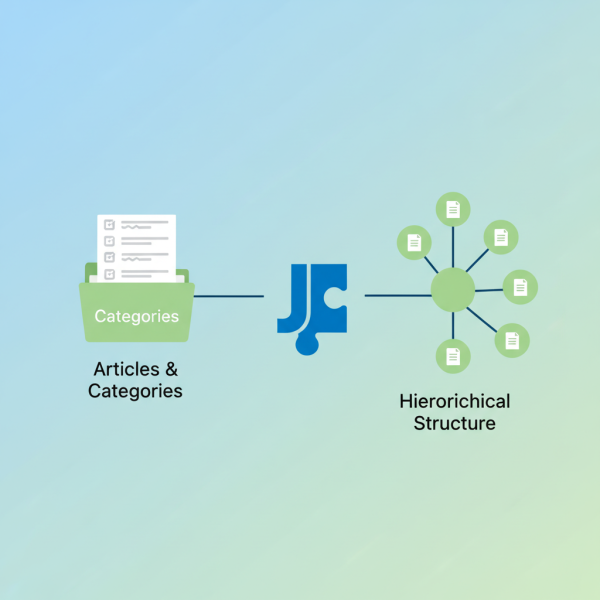
Articles vs. Categories: Understanding the Core of Joomla
What you'll learn
 Content OrganizationJoomla StructureCategory ImportanceArticle Management
Welcome, Joomla users! As you delve deeper into managing your website with this powerful Open Source Content Management System, a fundamental understanding of its core content logic is paramount. Central to Joomla's architecture are two distinct yet interconnected elements: Articles and Categories. Grasping the relationship between them is not just about knowing where to put your content; it's about building a robust, organized, and scalable website that is easy for both your visitors to navigate and for you to manage. This article will demystify the roles of articles and categories, explaining how they collaboratively create the structured foundation of your Joomla site.
The Foundation: What is a Joomla Article?
At its heart, a Joomla Article is the primary unit of content on your website. Think of an article as a single, self-contained piece of information you want to publish. This could be a blog post, a news item, a product description, a company announcement, or a static page like an "About Us" section. Each article typically includes a title, the main body of text, and often incorporates images, videos, or other media.
Articles are where the actual content lives. They possess various attributes such as a creation date, author information, publishing status, and metadata for search engines. The beauty of articles lies in their flexibility; they can be as simple or as complex as your content demands. However, an article, in isolation, doesn't provide much structure for your overall site. This is where categories become indispensable.
The Structure: What is a Joomla Category?
If articles are the individual pieces of content, then Categories are the logical containers that group related articles together. Imagine categories as folders in a filing cabinet or chapters in a book. Their primary purpose is to provide organizational structure, allowing you to classify and arrange your content in a meaningful way. This grouping makes it significantly easier for both your users to find what they're looking for and for you to manage your site's content.
Joomla categories are hierarchical, meaning you can create parent categories and then nest child categories within them. For instance, you might have a main category called "Products," and under it, child categories like "Electronics," "Apparel," and "Books." Further, "Electronics" could have sub-categories such as "Laptops" and "Smartphones." This hierarchical structure enables a sophisticated and intuitive content organization strategy.
The Symbiotic Relationship: Articles and Categories Working Together
The core logic of Joomla content management revolves around the symbiotic relationship between articles and categories. Every article you create in Joomla must be assigned to at least one category. This assignment is not merely a formality; it's the mechanism that brings order and navigability to your website.
When an article is placed into a category, it inherits a place within your site's overall structure. This allows visitors to browse through specific topics or sections of your website. For example, when a user clicks on a menu item linked to the "Blog" category, they will see a list or a blog-style layout of all articles assigned to that category. This seamless integration ensures that your content is not just published, but also discoverable and contextually relevant.
Why Proper Structuring Matters for Your Joomla Site
A well-thought-out article and category structure offers numerous benefits:
- Enhanced User Experience: Visitors can easily navigate your site, find relevant information quickly, and understand the relationship between different pieces of content. This leads to higher engagement and satisfaction.
- Improved Search Engine Optimization (SEO): A logical structure helps search engines understand your site's content hierarchy and topic relevance. Clear URLs and an organized site map contribute to better crawling and indexing, potentially boosting your search rankings.
- Streamlined Content Management: For administrators, finding, editing, or reordering content becomes a much simpler task when everything is neatly categorized. This saves time and reduces the likelihood of content getting lost or becoming outdated.
- Scalability and Future Growth: As your website grows and you add more content, a robust category structure ensures that your site can scale gracefully without becoming a chaotic mess. It provides a framework for future expansion.
Best Practices for Joomla Content Organization
To leverage the full power of articles and categories, consider these best practices:
- Plan Your Structure First: Before you start creating articles, map out your desired category hierarchy. Think about the main topics and sub-topics your website will cover.
- Keep Categories Logical and Intuitive: Ensure your category names are clear, descriptive, and make sense to your target audience. Avoid jargon where possible.
- Avoid Overly Deep or Shallow Hierarchies: While Joomla supports deep nesting, too many levels can make navigation cumbersome. Conversely, too few categories can lead to vast, unorganized sections. Find a balance that suits your content.
- Assign Articles Thoughtfully: Always place an article in the most relevant category. If an article could fit into multiple categories, choose the primary one that best represents its core topic.
- Regularly Review and Refine: As your website evolves, so might your content needs. Periodically review your category structure to ensure it remains relevant and efficient.
Summary
mastering the distinction and interplay between articles and categories is fundamental to effective Joomla content management. Articles are your individual content pieces, while categories are the organizational system that brings order, navigability, and meaning to your website. By diligently planning and implementing a logical category structure and consistently assigning your articles appropriately, you build a Joomla site that is not only rich in content but also user-friendly, SEO-optimized, and effortlessly manageable for years to come.
Comprehension questions
 What is the primary purpose of an Article in Joomla?How do Categories contribute to content organization in Joomla?Explain the hierarchical nature of Joomla Categories.Why is it important to plan your category structure before creating articles?