
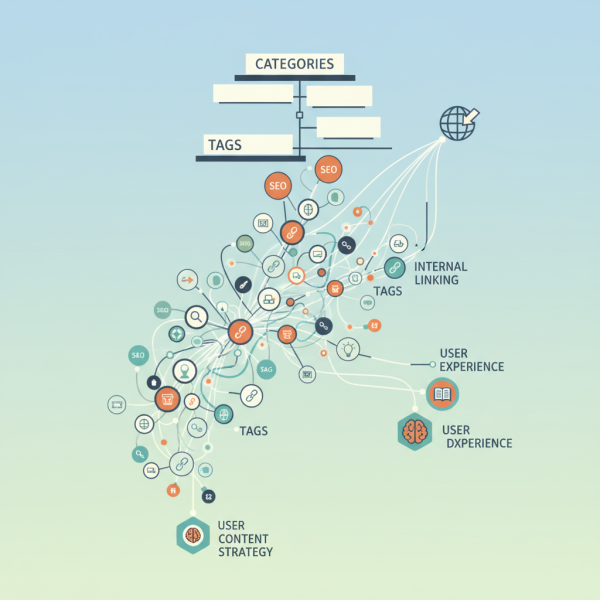
Joomla Tags to Enhance SEO and User Experience
What you'll learn
 Understanding Tags Beyond Categories in JoomlaThe SEO Advantage: How Tags Build Powerful Internal LinksEnhancing User Experience Through Smart TaggingContent Organization with Tags
In the vast landscape of website management, especially within robust content management systems like Joomla, the effective organization and discovery of content are paramount. While categories provide a broad structural framework, there's a powerful, yet often underutilized, tool that can significantly enhance both your site's search engine optimization (SEO) and user experience: tags. More than just simple keywords, a well-implemented tagging system holds the hidden power to transform your site's internal linking structure, creating a rich, interconnected web of content that benefits both visitors and search engines.
Understanding Tags Beyond Categories in Joomla
For many Joomla users, categories are the primary method of content organization. They create a hierarchical structure, placing articles into distinct, parent-child relationships. Tags, however, operate on a different principle. They are non-hierarchical, allowing you to associate articles with multiple, cross-cutting themes, ideas, or specific keywords that might span various categories. Think of categories as the shelves in a library and tags as the subject index that points to books across different shelves.
This flexibility is where the power begins. A single article can belong to one category (e.g., "Joomla Tutorials") but can have multiple tags like "SEO," "Internal Linking," "Content Strategy," and "Open Source." This ability to create many-to-many relationships between content and themes is fundamental to building a dynamic internal linking strategy.
The SEO Advantage: How Tags Build Powerful Internal Links
Search engines like Google rely heavily on internal links to understand the structure of your website, discover new content, and assess the importance of different pages. A well-constructed internal linking profile helps distribute 'link equity' (or 'PageRank') throughout your site, signaling to search engines which pages are most valuable and relevant.
- Contextual Connections: When you tag an article, Joomla automatically creates tag-specific pages (e.g., "All articles tagged 'SEO'") and often provides modules to display related articles based on shared tags. These automatically generated links are highly contextual, connecting pieces of content that genuinely relate to each other thematically. This is far more powerful than arbitrary links.
- Topic Clusters and Content Hubs: Tags are instrumental in forming topic clusters. By consistently tagging related articles with common terms, you naturally build hubs around these topics. For instance, all your articles tagged "Joomla Security" collectively form a strong resource hub on that subject, signalling expertise and authority to search engines.
- Improved Crawlability: A dense network of internal links, facilitated by tags, makes it easier for search engine bots to crawl and index your entire site. They can discover deeper pages more quickly, ensuring that all your valuable content is considered for ranking.
- Distributed Link Equity: Every internal link passes a small amount of link equity. By creating numerous relevant links through a tagging system, you strategically distribute this equity, boosting the overall authority of your interconnected articles.
Enhancing User Experience Through Smart Tagging
Beyond SEO, tags profoundly impact how users navigate and discover content on your Joomla site. A good tagging system improves engagement, reduces bounce rates, and keeps visitors on your site longer.
- Effortless Content Discovery: Users often land on a specific article, but their interest might extend to related topics. Tag clouds or 'related articles' modules (powered by tags) provide immediate, relevant suggestions, allowing users to dive deeper into your content without having to manually search or navigate through hierarchical categories.
- Intuitive Navigation: Tags offer a flexible alternative to traditional menu navigation. A user interested in "Joomla Performance" can click on that tag and instantly see all articles related to it, regardless of their primary category. This organic, interest-driven navigation enhances the overall user journey.
- Reduced Bounce Rates: By immediately offering more relevant content, tags can significantly decrease the likelihood that a visitor will leave your site after viewing just one page. They encourage exploration and prolonged engagement, which is a positive signal for both users and search engines.
Comprehension questions
 How do tags in Joomla differ from categories in their organizational principle?List three ways tags enhance SEO according to the article.How do tags contribute to an improved user experience on a Joomla site?What is 'link equity' and how do tags help distribute it?