Planning in Open Source Web Development
- -->> 1. Planning in Open Source Web Development
What you'll learn
 Project Lifecycle StagesImportance of PlanningOpen Source DevelopmentCommunity Collaboration
Understanding the Project Lifecycle
Embarking on any open source web development project, regardless of its scale, necessitates a structured approach to ensure its successful realization and long-term viability. This structured journey is encapsulated within the project lifecycle, a series of distinct phases that guide a project from its initial concept to its eventual retirement or ongoing evolution. For open source initiatives, where community collaboration and transparency are paramount, understanding and meticulously navigating each stage, especially through thorough planning, becomes not just beneficial but absolutely crucial.
The Fundamental Stages of the Project Lifecycle
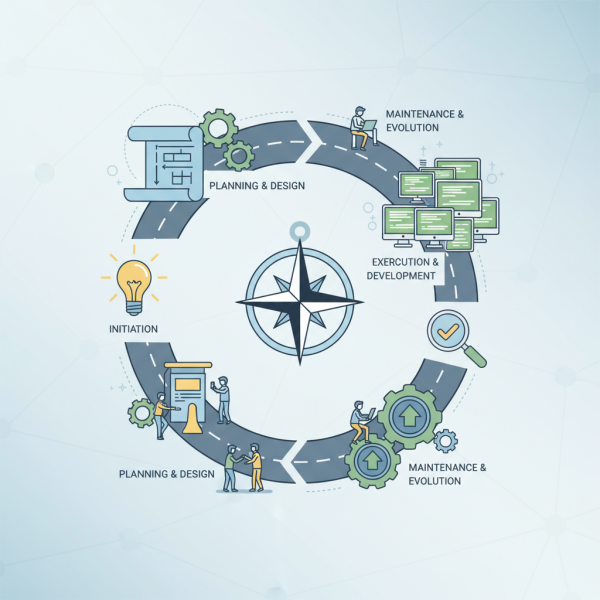
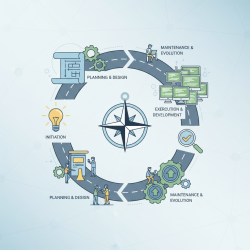
A typical project lifecycle for web development, particularly in an open source context, can be broadly divided into several sequential stages. While the nomenclature might vary, the core activities within each phase remain consistent, providing a clear framework for development teams and contributors.
These stages ensure that development progresses logically, allowing for checks, balances, and opportunities for feedback and adaptation.
Phase 1: Initiation and Conception
This initial stage is where the project idea takes shape. It involves identifying a problem or need that the proposed web application aims to solve. For open source projects, this often includes evaluating community interest and potential impact. Defining the project's core objectives, scope, and preliminary requirements are key activities here. A clear vision is established, laying the groundwork for all subsequent efforts.
Key considerations during initiation include:
- Problem definition and proposed solution
- Initial feasibility study and market/community research
- Identification of key stakeholders and potential contributors
- Defining preliminary project goals and success metrics
Phase 2: Planning and Design
Often considered the most critical phase, thorough planning and design dictate the project's trajectory. This is where the abstract ideas from the initiation phase are transformed into concrete blueprints. Detailed requirements are gathered, often through extensive discussions with potential users and community members. The system's architecture is designed, user interfaces are sketched, and the technology stack is selected. For open source projects, this phase is vital for establishing clear contribution guidelines, coding standards, and a robust communication strategy to engage the broader community effectively.
A well-executed planning phase addresses potential challenges before they escalate, saving significant time and resources down the line. It involves:
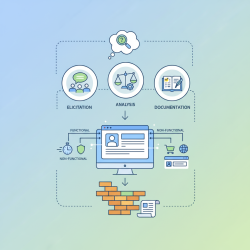
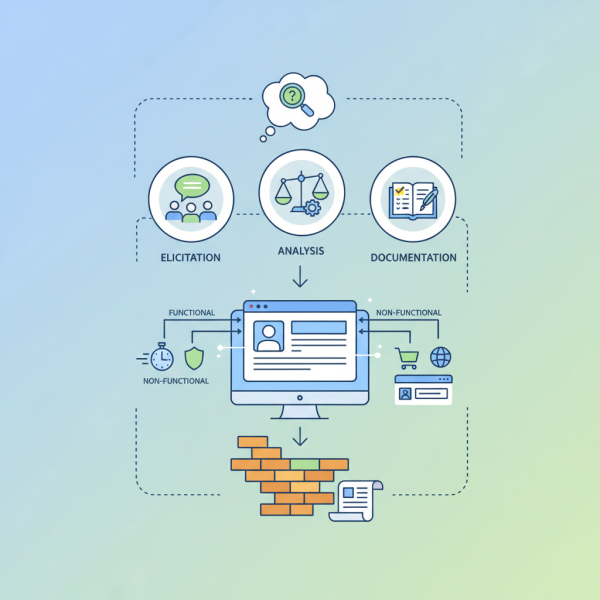
- Detailed requirements analysis and specification
- System architecture design and database schema definition
- User experience (UX) and user interface (UI) design
- Technology stack selection and third-party integrations
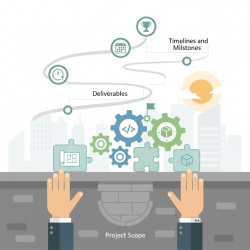
- Development of project timelines, milestones, and task breakdowns
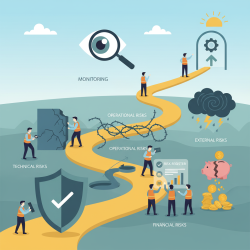
- Resource allocation and risk assessment
- Establishing communication channels and collaboration tools for the open source community
Phase 3: Execution and Development
With a solid plan in place, the project moves into the execution phase, where the actual coding and building of the web application occur. This stage involves writing code, creating databases, integrating components, and developing functionalities according to the design specifications. Iterative development methodologies, such as Agile, are commonly employed to allow for continuous feedback and adaptation. For open source projects, this phase is characterized by active contributions from various developers, pull requests, code reviews, and constant communication within the development community.
Phase 4: Testing and Deployment
Once development is complete, the application undergoes rigorous testing to identify and rectify bugs, performance issues, and security vulnerabilities. This includes unit testing, integration testing, system testing, and user acceptance testing (UAT). For open source projects, community-driven testing can be immensely powerful, leveraging diverse user perspectives. After successful testing, the application is deployed to its production environment, making it accessible to end-users.
Phase 5: Maintenance and Evolution
Deployment is not the end; it marks the beginning of the maintenance and evolution phase. This ongoing stage involves monitoring the application, fixing reported bugs, applying security patches, and implementing new features or enhancements based on user feedback and evolving requirements. For open source projects, this phase is perpetual, driven by community contributions, new ideas, and the need to adapt to technological advancements and user demands, ensuring the project remains relevant and useful over time.
The Unrivaled Importance of Thorough Planning
In the realm of open source web development, thorough planning is not merely a recommended practice; it is the bedrock upon which successful projects are built. The collaborative nature of open source, with its diverse contributors and often distributed teams, magnifies the need for clear, explicit planning.
Without a robust plan, open source projects can quickly descend into chaos, suffering from:
- Scope creep and undefined goals
- Duplication of effort among contributors
- Conflicting codebases and integration nightmares
- Lack of clear direction, leading to contributor disengagement
- Security vulnerabilities due to rushed development
- Difficulty in onboarding new contributors
Meticulous planning establishes a shared understanding among all participants, minimizes ambiguities, and sets realistic expectations. It provides a roadmap that guides development, facilitates effective communication, and allows for proactive risk management. For open source, a detailed plan also serves as a crucial documentation artifact, attracting new contributors by clearly outlining the project's vision, architecture, and contribution pathways.
Summary
The open source web development project lifecycle, encompassing initiation, planning, execution, testing, and maintenance, provides an essential framework for systematic progress. Among these, thorough planning stands out as the most critical phase, laying the foundation for clear communication, efficient resource utilization, risk mitigation, and fostering a thriving, collaborative community. Adhering to these stages with diligent planning is indispensable for transforming a project idea into a sustainable and impactful open source web application.
Comprehension questions
 What are the five fundamental stages of the open source web development project lifecycle?Why is the 'Planning and Design' phase considered especially crucial for open source projects?How does thorough planning mitigate risks in open source web development?What role does community engagement play in the 'Initiation' and 'Maintenance' phases of an open source project?
Review Quiz
Next Lesson
Course Contents : Website Project Planning
- >> 1.
 Planning in Open Source Web Development