Scoping, Deliverables, and Timelines in Development
- -->> 3. Scoping, Deliverables, and Timelines in Development
What you'll learn
 Project Scope DevelopmentClear Deliverable DefinitionRealistic Timeline CreationMilestone Planning
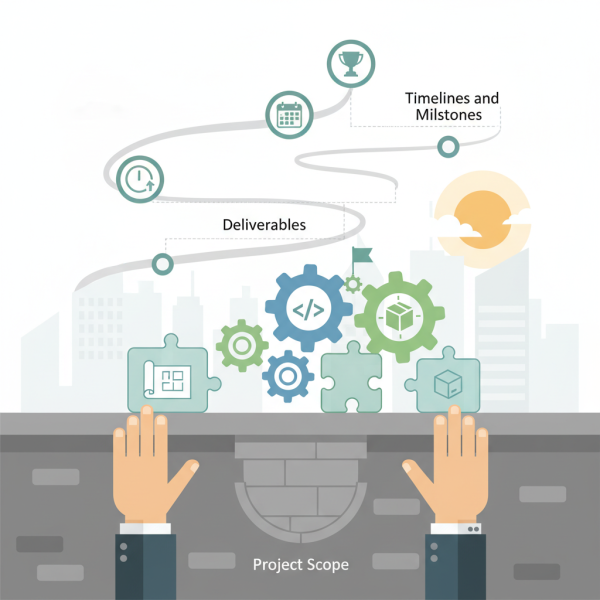
A well-defined project sets the stage for efficient work, minimizes risks, and ensures that the final product aligns perfectly with stakeholder expectations. This article delves into the critical processes of developing a robust project scope, clearly defining deliverables, and establishing realistic timelines and milestones, providing your development team with the essential framework needed for sustained success.
The Foundation: Robust Project Scope
A robust project scope acts as the bedrock of any successful development effort. It defines the boundaries of the project, detailing what is included and, equally important, what is explicitly excluded. Without a clear scope, projects can suffer from scope creep, where features are continuously added, leading to budget overruns, missed deadlines, and demotivated teams. Investing time upfront to solidify the scope prevents costly rework and misunderstandings down the line.
To develop a robust project scope, consider the following:
- Identify Stakeholders and Their Needs: Engage with all relevant parties to understand their expectations, requirements, and ultimate vision for the project. This collaborative approach ensures all perspectives are considered and integrated.
- Define Project Objectives Clearly: Articulate the core goals the project aims to achieve. These objectives should be SMART: Specific, Measurable, Achievable, Relevant, and Time-bound.
- List In-Scope Features and Functionality: Detail all the features, user stories, and functionalities that will be developed. Be as granular as possible to leave no room for ambiguity.
- Explicitly State Out-of-Scope Items: Clarify what the project will NOT include. This helps manage expectations and prevents future requests from derailing the project focus.
- Establish Success Metrics: Determine how the success of the project will be measured, aligning these metrics with the project objectives.
A comprehensive scope document serves as a single source of truth, guiding all decisions and actions throughout the project lifecycle. It provides a reference point whenever questions arise about what should or should not be done.
Defining Clarity: Deliverables
Once the project scope is established, the next crucial step is to define clear deliverables. Deliverables are the tangible outputs or results produced during the project's execution. They can range from design documents and code modules to user manuals and fully functional software releases. Clear deliverables ensure that everyone understands what needs to be produced and to what standard, making progress visible and accountability straightforward.
Key aspects of defining clear deliverables include:
- Specificity: Each deliverable should be described with sufficient detail, including its purpose, format, and expected content. Avoid vague terms like "frontend component" and instead specify "responsive user registration form, integrated with API, conforming to design system X."
- Quality Standards: Outline the quality criteria for each deliverable. This could involve coding standards, performance benchmarks, or user acceptance criteria. Defining these upfront helps ensure that the output meets the required level of excellence.
- Dependencies: Identify any interdependencies between deliverables. Understanding which deliverables rely on others is vital for effective scheduling and resource allocation.
- Ownership: Assign clear ownership for each deliverable. Knowing who is responsible for producing a specific item fosters accountability and streamlines communication.
- Review and Approval Process: Establish a formal process for reviewing and approving deliverables. This ensures that completed work is validated and officially accepted before moving to the next stage.
Well-defined deliverables break down a large project into manageable parts, allowing teams to focus on producing high-quality work in smaller, more achievable increments.
Navigating Time: Realistic Timelines and Milestones
Even with a robust scope and clear deliverables, a project can falter without realistic timelines and well-defined milestones. Timelines provide a schedule for the project, while milestones serve as critical checkpoints, marking significant progress or the completion of key stages. Setting achievable deadlines prevents burnout, allows for proper resource allocation, and builds confidence within the team and among stakeholders.
To create realistic timelines and milestones:
- Break Down Tasks: Decompose deliverables into smaller, actionable tasks. This makes estimation more accurate and allows for better tracking of progress.
- Estimate Effort Accurately: Involve the development team in the estimation process. Their expertise provides the most realistic view of the time required for each task. Consider using techniques like three-point estimation or planning poker.
- Account for Contingencies: Always build buffer time into your schedule to accommodate unforeseen challenges, technical hurdles, or scope adjustments. A common practice is to add a contingency of 10-20% to task estimates.
- Define Clear Milestones: Milestones should be significant, measurable points in the project lifecycle, such as "Design Phase Complete," "Alpha Release Ready," or "User Acceptance Testing Initiated." They should not be tied to the start or end of a single small task.
- Visualize the Schedule: Use Gantt charts, Kanban boards, or other project management tools to visualize the timeline and milestones. This provides a clear overview for everyone involved.
- Regularly Review and Adjust: Timelines are not static. Regularly review progress against the schedule and be prepared to adjust if circumstances change. Transparent communication about these adjustments is crucial.
Realistic timelines and milestones manage expectations, provide motivation, and enable early detection of potential delays, allowing for proactive intervention.
Key Strategies for Success
Beyond the core elements of scope, deliverables, and timelines, several strategies can further enhance a project's chances of success:
- Continuous Communication: Maintain open and frequent communication with all stakeholders and the development team. Regular updates, stand-ups, and review meetings ensure everyone is aligned and informed.
- Risk Management: Proactively identify potential risks – technical, operational, or external – and develop mitigation strategies. Addressing risks early can prevent them from becoming major issues.
- Flexibility and Adaptability: While a robust plan is essential, be prepared to adapt. Market changes, new requirements, or unforeseen technical challenges may necessitate adjustments to the plan.
- Tool Utilization: Leverage project management software to track tasks, manage resources, and monitor progress. Tools can greatly improve efficiency and transparency.
- Team Empowerment: Trust your development team. Provide them with the autonomy and resources needed to execute their tasks effectively, and encourage their input in planning and problem-solving.
By integrating these strategies, teams can not only build strong project foundations but also navigate complexities with greater resilience.
Summary
Developing a successful project requires a disciplined approach, starting with a robust project scope that clearly defines boundaries and objectives. Subsequently, meticulously defining deliverables ensures that all outputs are specific, meet quality standards, and have clear ownership. Finally, establishing realistic timelines and milestones provides a practical roadmap, managing expectations and enabling effective progress tracking. By diligently focusing on these foundational elements and embracing strategies for continuous communication, risk management, and adaptability, development teams can significantly enhance their project success rates, delivering high-quality products on time and within budget.
Comprehension questions
 Why is a robust project scope considered the bedrock of any successful development effort, and what risks does a lack of clarity pose?What are the five key aspects to consider when defining clear deliverables, and why is specificity important?What are some effective strategies for creating realistic timelines and milestones, and why is contingency planning crucial?Beyond scope, deliverables, and timelines, what additional strategies can enhance a project's chances of success?
Review Quiz
Next Lesson

Course Contents : Website Project Planning
- >> 3.
 Scoping, Deliverables, and Timelines in Development