Mastering Project Risk Management
- -->> 4. Mastering Project Risk Management
What you'll learn
 Risk Identification TechniquesRisk Impact AssessmentProactive Mitigation StrategiesContinuous Risk Monitoring
Mastering Project Risk Management for On-Track Success
In the dynamic landscape of project management, unforeseen challenges are not just possibilities; they are inevitabilities. The ability to identify potential project risks, accurately assess their impact, and formulate proactive mitigation strategies is not merely a best practice—it is the bedrock of project resilience and successful delivery. Without a robust risk management framework, projects can easily derail, leading to budget overruns, missed deadlines, and compromised quality. This article delves into a systematic approach to navigate these uncertainties, ensuring your project stays on its intended course.
The Foundation: Understanding Project Risks
A project risk is an uncertain event or condition that, if it occurs, has a positive or negative effect on one or more project objectives, such as scope, schedule, cost, and quality. While some risks might offer opportunities, the focus often lies on potential threats that could impede progress. Understanding the nature of risks is the first step towards managing them effectively.
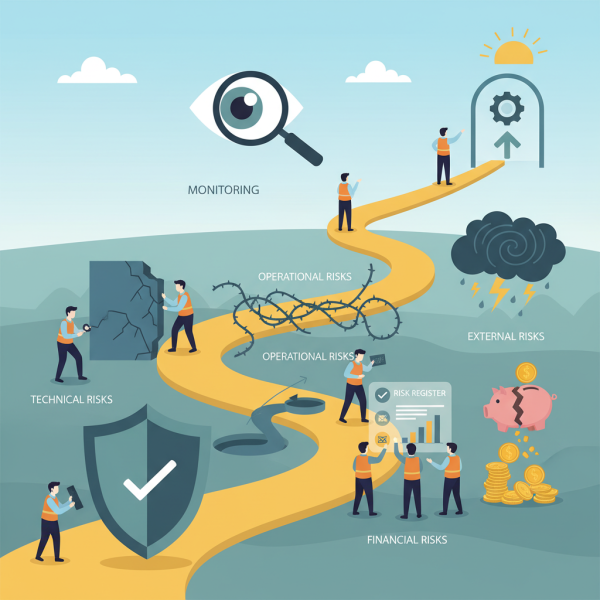
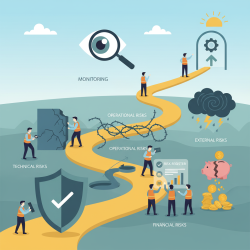
Risks can manifest in various forms: technical risks related to unproven technology or complex designs; financial risks concerning budget constraints or inaccurate cost estimates; operational risks involving resource availability or process failures; and external risks such as market shifts, regulatory changes, or natural disasters. Recognizing this broad spectrum is vital for comprehensive risk identification.
Identifying Potential Project Risks
Early and thorough identification of potential risks is paramount. The sooner a risk is identified, the more time and options are available to plan for it. This phase requires a collaborative and open environment, encouraging all stakeholders to contribute their insights.
- Brainstorming Sessions: Gather project team members, subject matter experts, and key stakeholders to openly discuss and list all possible risks. Encourage diverse perspectives.
- SWOT Analysis: Evaluate project Strengths, Weaknesses, Opportunities, and Threats. Threats often reveal potential risks, while weaknesses can highlight vulnerabilities.
- Delphi Technique: A structured communication technique, originally developed as a systematic, interactive forecasting method which relies on a panel of experts. Experts answer questionnaires in two or more rounds. After each round, a facilitator provides an anonymous summary of the experts' forecasts and the reasons they provided for their judgments. Experts are then encouraged to revise their earlier answers in light of the collective response.
- Checklists and Historical Data: Use lessons learned from previous similar projects and industry-specific risk checklists to identify common pitfalls.
- Root Cause Analysis: Investigate potential problems to find underlying causes rather than just addressing symptoms.
- Assumptions Analysis: Scrutinize all project assumptions; if an assumption proves false, it becomes a risk.
All identified risks should be documented in a comprehensive risk register, which serves as a central repository for tracking and managing them throughout the project lifecycle.
Assessing Risk Impact and Likelihood
Once risks are identified, the next critical step is to assess their potential impact on project objectives and the likelihood of their occurrence. This assessment allows for prioritization, ensuring that resources are allocated to managing the most significant threats.
Qualitative Risk Analysis: This method prioritizes identified risks for further analysis or action by assessing their probability of occurrence and impact on project objectives. A common tool is the Risk Matrix, where risks are plotted based on their likelihood (e.g., very low, low, medium, high, very high) and impact (e.g., negligible, minor, moderate, significant, catastrophic). This visual representation helps in quickly identifying high-priority risks.
Quantitative Risk Analysis: For high-priority risks, a more detailed quantitative analysis may be performed. This involves numerical analysis of the effect of risks on overall project objectives. Techniques like Monte Carlo simulation can be used to model the potential impact of multiple risks on project schedules and costs, providing a probabilistic distribution of possible outcomes.
The output of this phase is a prioritized list of risks, along with their assessed likelihood and impact, which then informs the development of mitigation strategies.
Formulating Proactive Mitigation Strategies
With a clear understanding of prioritized risks, the team can now develop strategies to address them. These strategies aim to reduce the likelihood of a risk occurring, lessen its impact if it does occur, or take advantage of positive risks (opportunities).
Four primary strategies are commonly employed:
- Risk Avoidance: Eliminating the threat entirely. This might involve changing the project plan, scope, or technology to steer clear of the risk. For example, opting for a proven technology instead of a new, unproven one.
- Risk Transfer: Shifting the responsibility and impact of a risk to a third party. This is often achieved through insurance, warranties, or outsourcing specific project components to specialists.
- Risk Mitigation (Reduction): Taking steps to reduce the probability of a risk occurring or to minimize its impact if it does. Examples include implementing robust testing protocols, conducting thorough training, or adding extra resources to critical tasks.
- Risk Acceptance: Deciding to accept the risk's existence without taking any action to address it. This strategy is typically reserved for low-priority risks where the cost of mitigation outweighs the potential impact. It can be passive (doing nothing) or active (developing a contingency plan).
For accepted risks, especially those with moderate to high impact, it is crucial to develop contingency plans—pre-defined actions to be taken if the risk materializes. These plans act as a safety net, allowing for a swift and organized response.
Implementing and Monitoring Risk Strategies
Developing strategies is only half the battle; effective implementation and continuous monitoring are equally crucial. Risk management is an ongoing process, not a one-time activity.
Assign Ownership: Each identified risk and its associated mitigation or contingency plan should have a designated owner responsible for monitoring the risk and executing the plan if needed.
Regular Reviews: Schedule periodic risk reviews throughout the project lifecycle. This allows the team to identify new risks, reassess existing ones, and evaluate the effectiveness of implemented strategies. Project environments are dynamic, and risks can change or emerge.
Communication: Maintain open and transparent communication about risks with all stakeholders. This ensures everyone is aware of potential issues, the steps being taken, and any changes in risk status.
Flexibility and Adaptation: Be prepared to adjust risk strategies as the project progresses and new information becomes available. A rigid approach can be as detrimental as no risk management at all.
Summary: Navigating Towards Project Certainty
Effective project risk management is an indispensable discipline for ensuring project success. By systematically identifying potential risks, thoroughly assessing their likelihood and impact, and proactively formulating robust mitigation and contingency strategies, project managers can navigate the complexities of their initiatives with greater confidence. Continuous monitoring and adaptation are key to maintaining control, allowing projects to remain on track, achieve their objectives, and deliver anticipated value. Embracing a proactive stance toward risk transforms potential pitfalls into manageable challenges, paving the way for consistent project certainty and exemplary outcomes.
Comprehension questions
 What are the four primary strategies for risk mitigation discussed in the article?Why is continuous monitoring of risks important throughout a project's lifecycle?Name three techniques for identifying potential project risks.How does a risk matrix help in assessing and prioritizing project risks?
Community Poll
Next Lesson
Course Contents : Website Project Planning
- >> 4.
 Mastering Project Risk Management