Building Your Online Business Backbone with a Powerful CMS
- -->> 1. Building Your Online Business Backbone with a Powerful CMS
What you'll learn
 Joomla FundamentalsCore Architecture ConceptsOnline Business BackboneContent Management System
At the heart of many successful online ventures lies a robust Content Management System (CMS), and among the most powerful and flexible options available is Joomla. This article will delve into the fundamental concepts of Joomla, explore its sophisticated architecture, and illustrate how this versatile platform can serve as the reliable backbone for your online business, empowering you to manage content, engage customers, and scale operations with ease.
What is Joomla?
Joomla is an award-winning, open-source Content Management System (CMS) that allows users to build websites and powerful online applications. It is renowned for its ease of use and extensibility, making it a popular choice for everything from simple personal blogs to complex corporate websites and e-commerce platforms. As an open-source solution, it benefits from a large, active community that contributes to its development, documentation, and support, ensuring its continuous improvement and security.
Fundamentally, Joomla separates content from presentation. This means you can focus on creating and managing your information without worrying about the underlying code or design, which can be handled independently. This clear separation streamlines workflows and allows for greater flexibility in design and functionality updates.
Joomla's Core Architecture: A Robust Foundation
Understanding Joomla's architecture is key to harnessing its full potential. At its core, Joomla is built using the Model-View-Controller (MVC) design pattern, which promotes organized development and separation of concerns. This pattern helps developers maintain clean code and allows for easier customization and extension. The architecture can be broadly understood by considering its frontend and backend, and its powerful system of extensions.
Frontend vs. Backend
- Frontend: This is the public-facing part of your website, what visitors see and interact with. It's where your content, articles, images, and interactive elements are displayed, guided by your chosen template.
- Backend (Administrator Interface): This is the control panel where you, as the site administrator, manage all aspects of your website. From here, you can create and edit content, install extensions, manage users, configure settings, and oversee the entire site's operation.
The Power of Extensions
Joomla's extensibility is one of its greatest strengths. The platform provides a framework upon which various types of "extensions" can be built and integrated. These extensions add specific functionalities to your website, allowing you to tailor it precisely to your business needs without needing to code everything from scratch. There are four primary types of extensions:
- Components: These are the largest and most complex extensions, essentially mini-applications that provide the main functionality of your site. Examples include article managers, contact forms, e-commerce systems, or forum software. Each component typically manages a specific set of content and interactions.
- Modules: Modules are smaller, more flexible content blocks that can be displayed in various positions around the main component output. Think of them as widgets. Common modules include navigation menus, login forms, popular articles lists, or custom HTML blocks.
- Plugins: Plugins are small pieces of code that execute on specific events within Joomla. They are used to extend the core functionality of Joomla itself or other extensions, often without a visible output on the frontend. Examples include content manipulation (e.g., adding a "read more" button), user authentication, or search indexing.
- Templates: Templates control the entire look and feel of your Joomla website. They define the layout, colors, fonts, and overall design presentation. A template essentially provides the skin for your site, allowing you to change its appearance dramatically without affecting the underlying content or functionality.
Underneath these extensions, Joomla relies on a robust database (typically MySQL) to store all its content, user information, and configuration settings, ensuring that your data is organized and easily retrievable.
How Joomla Empowers Your Online Business
Leveraging Joomla as the backbone for your online business offers numerous advantages, enabling you to build a powerful and adaptable digital platform.
Comprehensive Content Management
Joomla provides intuitive tools for creating, editing, publishing, and organizing a wide array of content types, including articles, blogs, news feeds, and multimedia. Its hierarchical structure for categories and articles makes content organization straightforward, essential for large websites.
Scalability and Flexibility
From a small brochure website to a sprawling corporate portal with thousands of pages and users, Joomla can scale to meet your demands. The extensive ecosystem of extensions means you can add new features as your business grows, from simple contact forms to complex membership systems or full-fledged e-commerce stores.
E-commerce Integration
With powerful e-commerce components like Virtuemart or JoomShopping, Joomla can be transformed into a complete online store. These extensions provide functionalities for product catalogs, shopping carts, secure payment gateways, order management, and customer accounts, facilitating seamless online transactions.
Community and Social Features
If your business thrives on user interaction, Joomla offers extensions for forums, social networking, and user-generated content. This allows you to build a vibrant online community around your brand, fostering engagement and loyalty.
Search Engine Optimization (SEO) Friendly
Joomla is built with SEO in mind, offering features such as clean URLs (SEF URLs), metadata management, and sitemap generation to help your website rank higher in search engine results. This built-in capability is crucial for driving organic traffic to your online business.
Robust Security Features
Security is a paramount concern for any online business. Joomla consistently releases updates and patches to address vulnerabilities, and its community actively monitors for potential threats. Features like strong password policies, access control lists (ACL), and two-factor authentication provide layers of protection for your site and user data.
Getting Started with Joomla
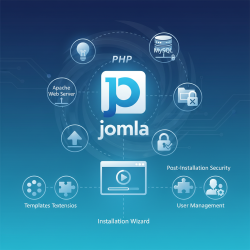
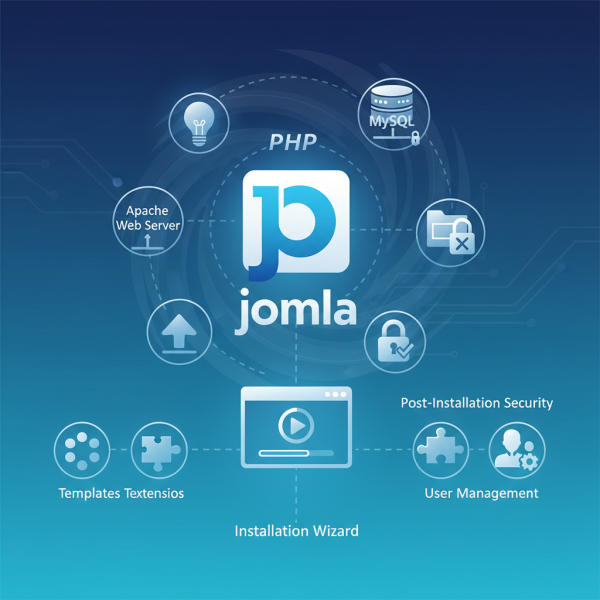
Initiating your journey with Joomla is relatively simple. It typically involves choosing a web host that supports PHP and MySQL, downloading the Joomla package, and following a straightforward installation wizard. Once installed, you can begin populating your site with content, selecting a suitable template, and installing any necessary extensions to fulfill your business's specific requirements. The extensive documentation and community forums are invaluable resources for beginners.
Summary
Joomla stands out as a highly capable and adaptable Content Management System, offering a robust foundation for any online business. We've explored its core architecture, including the distinct roles of the frontend and backend, and the critical function of its various extensions: components, modules, plugins, and templates. Furthermore, we've highlighted how Joomla empowers businesses through comprehensive content management, scalability, e-commerce capabilities, community features, SEO-friendliness, and strong security measures. By understanding these fundamental concepts, businesses can effectively leverage Joomla to construct and maintain a dynamic, secure, and future-proof online presence.
Comprehension questions
 What are the four main types of extensions in Joomla's architecture?How does the MVC design pattern apply to Joomla's component development?List three ways Joomla can empower an online business, as discussed in the article.What is the primary function of a Joomla template?
Community Poll
Next Lesson
Course Contents : Joomla Website QuickStart Guide
- >> 1.
 Building Your Online Business Backbone with a Powerful CMS