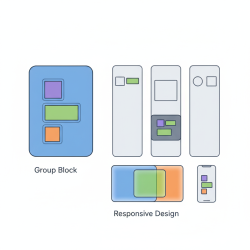
Leveraging Reusable Blocks and Block Patterns
- -->> 5. Leveraging Reusable Blocks and Block Patterns
What you'll learn
 Content Creation EfficiencyDesign ConsistencyReusable Blocks BenefitsBlock Pattern Usage
Whether you manage a personal blog, a business website, or a large editorial platform, the ability to rapidly deploy beautifully designed and functionally robust content elements can significantly streamline your workflow. This is where reusable blocks and block patterns emerge as indispensable tools, offering powerful solutions to maintain a cohesive brand identity and accelerate your content production process. By understanding and effectively utilizing these features, you can transform your content creation strategy, ensuring every piece of content not only looks professional but is also produced with unparalleled ease.
The Power of Reusable Blocks
Reusable blocks are individual content elements or groups of elements that you can save and insert across multiple pages and posts on your website. Think of them as templates for specific content pieces—be it a call-to-action, a team member profile, a disclaimer, or a set of frequently asked questions. Once you create and save a reusable block, it becomes available in your block library, ready to be added anywhere with just a few clicks.
The primary advantage of reusable blocks lies in their central management. If you update a reusable block, those changes automatically propagate to every instance where that block is used throughout your site. This ensures absolute consistency and eliminates the tedious task of manually updating identical content across numerous pages. For example, if your company's contact information or a standard legal disclaimer changes, updating one reusable block instantly updates it everywhere, saving immense time and preventing errors.
Beyond consistency, reusable blocks dramatically boost efficiency. Content creators no longer need to build common elements from scratch each time. This not only speeds up the creation process but also reduces the cognitive load, allowing them to focus more on the unique aspects of each new piece of content. They are perfect for elements that frequently appear and require uniform styling and content.
Mastering Block Patterns
Block patterns take the concept of reusability a step further by offering pre-designed layouts and sections composed of multiple blocks. Unlike reusable blocks, which are centrally linked, block patterns are essentially blueprints. When you insert a block pattern, it creates a new, independent copy of the layout. This means you can insert a pattern and then modify its content and design without affecting other instances of that pattern or the original pattern itself.
Block patterns are ideal for jumpstarting the design of complex sections or entire page layouts. Imagine needing a hero section with an image, headline, and button, or a service comparison table. Instead of manually assembling these blocks every time, you can insert a pre-built pattern. While the initial structure is provided, you have complete freedom to customize the content, images, and even the block settings within that pattern instance.
Creating your own custom block patterns is a powerful way to encapsulate your brand's specific design language. You can design a section exactly how you want it, save it as a pattern, and then make it available for all users on your site. This empowers teams to quickly build pages that adhere to design guidelines, even those with limited design experience, fostering a cohesive and professional online presence.
Practical Application and Workflow
Understanding when to use reusable blocks versus block patterns is key to optimizing your workflow. Use reusable blocks for content that needs to be identical across the site and is subject to site-wide updates. Use block patterns for starting points or section layouts that will be customized after insertion. Here are some best practices:
- For global elements: Always use reusable blocks for elements like copyright notices in footers, standard author bios, or frequently asked question answers that need to be consistent.
- For section templates: Employ block patterns for common page sections such as hero banners, testimonial carousels, pricing tables, or "meet the team" sections where the structure is consistent but the individual content varies.
- Organize and label: Give your reusable blocks and block patterns clear, descriptive names to make them easy to find and manage in your library.
- Collaborate effectively: Both tools can be shared and used by multiple contributors, ensuring everyone on a content team adheres to the same standards and uses approved design elements.
A well-defined strategy for these tools can significantly reduce production time, minimize design discrepancies, and allow your team to publish high-quality content more frequently.
Advanced Tips for Maximizing Efficiency
To truly unlock the full potential of reusable blocks and block patterns, consider these advanced strategies. Integrating them thoughtfully can elevate your site's maintenance and content creation efficiency to new levels.
Combining Patterns with Custom Fields
For even greater flexibility, especially in professional environments, consider combining block patterns with custom fields. While patterns provide structural blueprints, custom fields can dynamically populate content within those patterns. For instance, a "product feature" block pattern could include placeholders for a product name, description, and image. Using custom fields, you can then populate these details from a database, making the pattern highly versatile without manual input for each new product.
Accessibility Considerations
When designing block patterns, always keep accessibility in mind. Ensure that the structure and semantic markup generated by your patterns are accessible. This includes proper heading hierarchy, alternative text for images, sufficient color contrast, and keyboard navigability. Building accessibility into your patterns from the outset saves significant rework and ensures your content is usable by everyone.
Performance Implications
While reusable blocks and patterns are generally lightweight, be mindful of their quantity and complexity. Excessive numbers of overly complex patterns or a large number of reusable blocks on a single page could theoretically impact loading times, though typically the impact is negligible. Focus on creating efficient, well-structured patterns that serve clear purposes rather than overly ornate or redundant designs.
Summary
By leveraging reusable blocks and block patterns, content creators and site administrators gain powerful allies in their quest for streamlined content workflows and impeccable design consistency. These tools empower you to build a cohesive and professional online presence with remarkable efficiency. From accelerating content production to ensuring brand uniformity and simplifying site-wide updates, they are fundamental for modern website management. Embrace these features to transform your content strategy and unlock a new era of productivity and design excellence.
Comprehension questions
 What is the primary difference between a reusable block and a block pattern regarding how changes are applied?Name two benefits of using reusable blocks in content creation.When would you typically choose to use a block pattern over a reusable block?Besides consistency and efficiency, what other advanced consideration is important when designing block patterns?
Review Quiz
Next Lesson

Course Contents : WordPress Gutenberg: Advanced Block Editor Techniques
- >> 5.
 Leveraging Reusable Blocks and Block Patterns