Optimizing Development and Collaboration
- -->> 10. Optimizing Development and Collaboration
What you'll learn
 Version Control StrategiesDevelopment Environment SetupTeam CommunicationBlock Development Best Practices
Gutenberg has fundamentally reshaped how content is created and managed within WordPress websites. Its block-based editor introduces a new paradigm, demanding refined workflow and collaboration strategies for development teams. Navigating this environment efficiently requires a deliberate approach to development methodologies, robust version control, and clear communication channels. This article explores essential best practices designed to foster seamless teamwork, accelerate project delivery, and maintain high code quality within a Gutenberg-centric development ecosystem, ensuring that teams can leverage the full potential of this powerful editor without encountering common pitfalls.
Establishing a Solid Foundation with Version Control
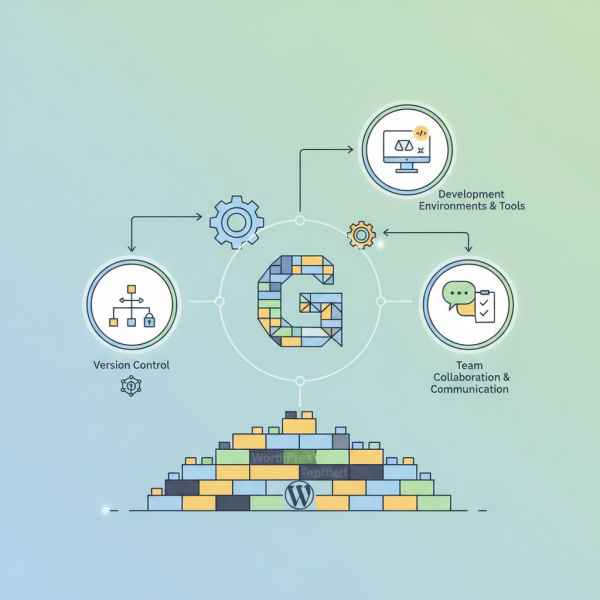
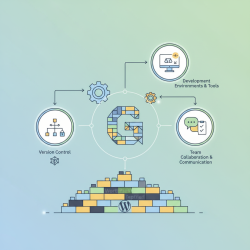
Version control is the bedrock of any collaborative development project, and its importance is amplified in a Gutenberg context where multiple developers might be working on custom blocks, themes, or plugins simultaneously. Git stands out as the industry standard for its distributed nature and powerful branching capabilities.
Implementing a clear branching strategy is paramount. A common approach involves a main branch (e.g., main or master) for production-ready code, a develop branch for ongoing integration, and feature branches for individual tasks or block development. This separation ensures that new features can be developed and tested in isolation without destabilizing the main codebase.
- Feature Branches: Each new block, feature, or bug fix should ideally begin in its own dedicated branch. This isolates changes and simplifies code reviews.
- Pull Requests (PRs): All code destined for integration into
developormainshould go through a pull request process. PRs facilitate peer review, catch potential issues early, and ensure adherence to coding standards. - Regular Merges/Rebases: Developers should frequently pull changes from the main integration branch (e.g.,
develop) into their feature branches to minimize merge conflicts and stay updated with the latest codebase.
Streamlining Development Environments and Tools
Consistent development environments are critical for preventing "it works on my machine" scenarios. Utilizing containerization tools like Docker or specialized local development solutions such as Local by WP Engine ensures that every developer is working in an identical setup, mirroring production as closely as possible.
For Gutenberg development specifically, leverage official tools and best practices. The @wordpress/create-block package is an invaluable tool for scaffolding new blocks, providing a consistent structure and handling much of the initial setup. This promotes uniformity across different blocks and reduces the overhead of starting new development tasks.
Embrace a component-driven development approach. Think of Gutenberg blocks themselves as components, but also consider breaking down complex blocks into smaller, reusable React components. This enhances modularity, simplifies testing, and accelerates development by allowing developers to build on existing parts.
Enhancing Team Collaboration and Communication
Effective communication is the lifeblood of any successful team. In a Gutenberg environment, where the visual output is as important as the underlying code, constant feedback and clear articulation of requirements are essential. Utilize dedicated communication platforms like Slack or Microsoft Teams for real-time discussions and project management tools such such as Jira or Trello for tracking tasks, progress, and issues.
Code reviews are not just about finding bugs; they are a powerful tool for knowledge sharing and fostering a culture of quality. Encourage constructive feedback and ensure that every developer understands the rationale behind specific design choices or architectural patterns. This also helps in maintaining consistency across the codebase, which is particularly important when building a suite of custom Gutenberg blocks.
Comprehensive documentation is another cornerstone of effective collaboration. Document custom blocks thoroughly, including their purpose, how to use them, available attributes, and any dependencies. This reduces onboarding time for new team members and serves as a valuable reference for existing ones, preventing tribal knowledge from becoming a bottleneck.
- Regular Stand-ups: Short daily meetings to discuss progress, immediate plans, and any blockers.
- Shared Design Systems: Implement a shared design system or component library to ensure visual and functional consistency across all custom blocks and front-end elements. This streamlines the design-to-development handoff.
- Clear Task Assignment: Ensure that responsibilities for developing specific blocks or features are clearly defined to avoid duplication of effort or confusion.
Optimizing Gutenberg Block Development Practices
When developing custom Gutenberg blocks, several best practices can significantly boost efficiency and maintainability. Always prioritize performance by optimizing asset loading and minimizing complex client-side logic where server-side rendering is more appropriate. Consider accessibility from the outset, ensuring blocks are usable by everyone, regardless of their abilities.
Internationalization (i18n) should also be an early consideration. Ensure all strings within blocks are translatable to support a global user base. Utilize the WordPress i18n functions effectively. Additionally, adhere to WordPress coding standards for PHP, JavaScript, and CSS to maintain consistency and ease of maintenance.
Automated testing, including unit tests for JavaScript components and integration tests for block rendering, can catch regressions early and provide confidence in code changes. This is especially vital in a dynamic environment where blocks interact with various parts of the WordPress ecosystem.
Summary
Mastering workflow and collaboration in a Gutenberg-centric development environment is crucial for building robust and scalable WordPress solutions. By implementing strong version control with Git, streamlining development environments, fostering clear communication and code review processes, and adopting specific best practices for Gutenberg block development, teams can significantly enhance efficiency and product quality. A commitment to these strategies ensures that development is not only productive but also collaborative and future-proof, allowing teams to fully harness Gutenberg's power.
Comprehension questions
 Why is version control considered non-negotiable in a Gutenberg-centric development environment?What is the purpose of using feature branches and pull requests in a Git-based workflow?How do consistent development environments and tools like <code>@wordpress/create-block</code> contribute to efficient Gutenberg development?Beyond finding bugs, what are two key benefits of implementing regular code reviews within a development team?
Community Poll
Next Lesson
Course Contents : WordPress Gutenberg: Advanced Block Editor Techniques
- >> 10.
 Optimizing Development and Collaboration