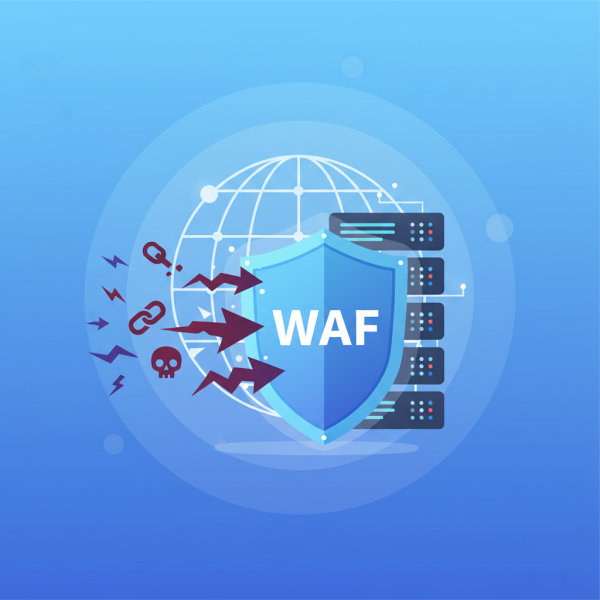
Introduction to Web Application Firewalls
- -->> 6. Introduction to Web Application Firewalls
What you'll learn
 WAF Selection CriteriaWAF Deployment ModelsWAF Configuration Best PracticesApplication-Layer Threat Mitigation
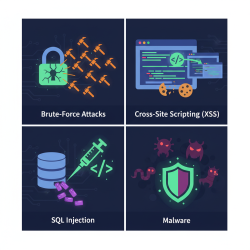
Web applications serve as critical interfaces for businesses and individuals alike. However, this accessibility also exposes them to a constant barrage of sophisticated cyber threats, ranging from SQL injection and cross-site scripting (XSS) to denial-of-service attacks. A Web Application Firewall (WAF) acts as a crucial defensive layer, specifically designed to protect web applications by filtering and monitoring HTTP traffic between a web application and the internet. This article will guide you through the essential process of selecting, installing, and configuring a suitable WAF to effectively filter malicious traffic and safeguard your valuable web assets.
Understanding Web Application Firewalls (WAFs)
A WAF operates at Layer 7 (the application layer) of the OSI model, distinguishing it from traditional network firewalls that inspect traffic at lower layers. Its primary function is to inspect incoming and outgoing HTTP/S traffic, identifying and blocking attacks that exploit vulnerabilities within the web application itself. By enforcing a set of rules, often referred to as policies, a WAF can detect and prevent various forms of malicious activity before they reach the application server, thus preventing data breaches, service disruptions, and reputational damage.
Unlike network firewalls that focus on network access and port filtering, a WAF understands the nuances of web application protocols and common attack patterns. It can analyze the content of web requests and responses, looking for signatures of known attacks, anomalous behavior, or violations of predefined security policies. This specialized protection is indispensable in an era where application-layer attacks are among the most prevalent and damaging threats.
Key Considerations for WAF Selection
Selecting the right WAF requires a thorough assessment of your organization's specific needs, existing infrastructure, and budget. There are several deployment models and features to consider:
WAF Deployment Models:
- Network-based WAFs: These are typically hardware appliances installed locally in front of web servers. They offer high performance and low latency but require significant upfront investment and physical management.
- Host-based WAFs: Integrated directly into the application server environment as a software plugin or module. They offer granular control and can be more cost-effective for smaller deployments but might consume server resources.
- Cloud-based WAFs: Delivered as a service by a third-party provider, these are often the easiest to deploy and manage. They offer scalability, robust threat intelligence, and DDoS protection, making them ideal for organizations seeking reduced operational overhead and global reach.
Essential WAF Features:
- OWASP Top 10 Protection: The WAF must effectively mitigate common web vulnerabilities like SQL Injection, Cross-Site Scripting (XSS), Broken Authentication, and Security Misconfigurations.
- Real-time Monitoring and Alerting: Capabilities to monitor traffic patterns, detect anomalies, and generate alerts for suspicious activities.
- AI and Machine Learning Capabilities: Advanced WAFs leverage AI/ML to learn application behavior, identify zero-day threats, and reduce false positives.
- Custom Rule Creation: The ability to define and implement custom security rules tailored to your application's unique logic and specific business requirements.
- Performance and Scalability: Ensure the WAF can handle your application's traffic volume without introducing unacceptable latency or becoming a bottleneck.
- Integration: Compatibility with existing security tools, such as Security Information and Event Management (SIEM) systems, threat intelligence platforms, and CDN services.
- DDoS Mitigation: Many WAFs offer capabilities to detect and mitigate application-layer Distributed Denial of Service (DDoS) attacks.
Comprehension questions
 What are the three main deployment models for Web Application Firewalls, and what are their primary characteristics?Why is OWASP Top 10 protection considered an essential feature for any Web Application Firewall?What is the significance of placing a WAF in 'learning mode' during its initial configuration?Why is continuous monitoring and periodic review of WAF logs and rules important for maintaining effective security?
Community Poll
Next Lesson

Course Contents : WordPress Security Essentials
- >> 6.
 Introduction to Web Application Firewalls