Real-time Monitoring and Logging for Threat Detection
- -->> 9. Real-time Monitoring and Logging for Threat Detection
What you'll learn
 Log Collection and AggregationSIEM and Real-time AnalysisTool Selection and Best PracticesThreat Detection Techniques
From sophisticated ransomware attacks to subtle insider threats, the potential for security breaches is ever-present. To effectively defend against these evolving dangers, it is no longer sufficient to rely solely on preventative measures. A proactive and reactive approach, centered on real-time monitoring and logging, is absolutely critical. This article will delve into the essential strategies and tools required to set up robust monitoring and logging systems, enabling the timely detection of suspicious activities and security events, thereby fortifying your digital defenses.
Why Monitoring and Logging Are Crucial
Cybersecurity is a dynamic field, where attackers constantly refine their tactics. While firewalls and antivirus software are foundational, they often cannot detect novel attack vectors or advanced persistent threats (APTs) that bypass initial defenses. This is where comprehensive monitoring and logging come into play, providing the necessary visibility into your network and systems.
Logs are essentially digital fingerprints of every activity occurring within your IT environment. They record everything from user logins and file access attempts to network traffic patterns and application errors. Without a systematic way to collect, store, and analyze these logs, critical security events can easily go unnoticed, allowing attackers to operate undetected for extended periods, leading to potentially catastrophic consequences.
Key Components of a Robust Monitoring and Logging Strategy
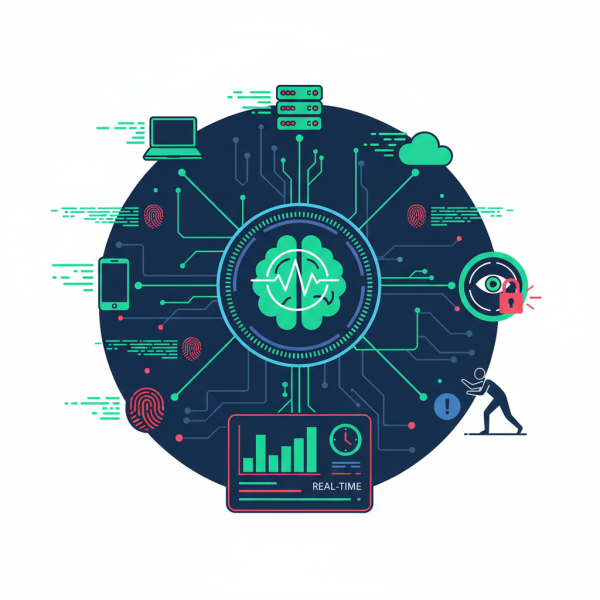
A successful real-time monitoring and logging strategy involves several interconnected components working in harmony to provide a holistic security posture.
Log Collection
The first step is to collect logs from all relevant sources across your infrastructure. This includes operating systems (Windows Event Logs, Linux Syslog), applications (web servers, databases, custom applications), network devices (routers, switches, firewalls), security tools (intrusion detection/prevention systems), and cloud environments. Ensuring comprehensive collection provides the raw data necessary for analysis.
Log Aggregation and Centralization
Once collected, logs from disparate sources need to be aggregated and centralized into a single repository. This simplifies management, ensures data integrity, and makes it possible to perform correlation across different data types. Centralized log management platforms are designed for this purpose, providing scalable storage and indexing capabilities.
Log Analysis and Correlation (SIEM)
Merely collecting logs is not enough; they must be analyzed to extract meaningful security intelligence. Security Information and Event Management (SIEM) systems are specialized tools that ingest log data, normalize it, and apply rules and analytics to identify patterns indicative of suspicious activity. SIEMs can correlate events from different sources, revealing attack chains that individual logs might miss.
Alerting and Notification
Real-time detection is futile without timely notification. The monitoring system must be configured to generate alerts when predefined thresholds are breached or specific suspicious patterns are detected. These alerts should be routed to appropriate security personnel via various channels such as email, SMS, or integration with incident response platforms, ensuring rapid awareness and action.
Reporting and Dashboards
Beyond immediate alerts, comprehensive reporting and interactive dashboards provide a high-level overview of security posture, trends, and compliance status. These visual aids help security teams understand the overall health of the environment, identify long-term patterns, and communicate security insights to management.
Choosing the Right Tools
Selecting the appropriate monitoring and logging tools depends on various factors, including the organization's size, budget, technical expertise, and specific security requirements. Both open-source and commercial solutions offer distinct advantages.
- Open-Source Solutions: Options like the ELK Stack (Elasticsearch, Logstash, Kibana) or Graylog offer powerful logging and analytics capabilities with no licensing costs. They require significant in-house expertise for setup, configuration, and maintenance but provide immense flexibility.
- Commercial Solutions: Platforms such as Splunk, IBM QRadar, Microsoft Sentinel, and Datadog offer comprehensive features, user-friendly interfaces, extensive support, and often include advanced analytics and threat intelligence integrations. While incurring licensing fees, they can reduce operational overhead for many organizations.
When evaluating tools, consider scalability to handle growing data volumes, ease of integration with existing systems, compliance requirements, and the availability of community or vendor support.
Implementation Best Practices
Effective implementation goes beyond just installing software. It requires careful planning and adherence to best practices.
- Define Logging Requirements: Clearly identify what information needs to be logged from each system based on compliance, business, and security needs. Avoid logging excessive, irrelevant data, which can lead to "alert fatigue" and increased storage costs.
- Standardize Log Formats: Where possible, standardize log formats to simplify parsing and analysis. This often involves using agents or configuring systems to output logs in common formats like JSON or Syslog.
- Secure Log Data: Logs often contain sensitive information. Ensure they are stored securely, encrypted at rest and in transit, and access is restricted to authorized personnel. Implement tamper-detection mechanisms.
- Regularly Review and Tune Alerts: Continuously review generated alerts to reduce false positives and ensure that critical events are being correctly identified. Tune alert rules based on ongoing threat intelligence and changes in your environment.
- Test Your System: Periodically test your monitoring and logging infrastructure by simulating security incidents to verify that alerts are triggered correctly and incident response procedures are effective.
- Train Your Team: Ensure that security analysts and IT staff are adequately trained to use the monitoring tools, interpret alerts, and follow incident response protocols.
Detecting Suspicious Activities in Real-time
The ultimate goal of monitoring and logging is to detect suspicious activities as they happen. This involves several advanced techniques.
Rule-Based Detection: This is the most common method, where predefined rules trigger alerts based on specific log patterns, such as multiple failed login attempts, unusual access to sensitive files, or outbound connections to known malicious IPs.
Behavioral Analytics: Advanced SIEMs and User and Entity Behavior Analytics (UEBA) tools establish a baseline of normal behavior for users, devices, and applications. Deviations from this baseline, such as a user logging in from an unusual location or accessing systems outside their normal working hours, can indicate suspicious activity.
Threat Intelligence Integration: Integrating real-time threat intelligence feeds allows your monitoring system to instantly compare incoming log data against known malicious IPs, domains, and malware signatures, significantly enhancing detection capabilities.
Automated Responses: In some cases, automated responses can be configured for critical alerts, such as blocking an IP address at the firewall, disabling a compromised user account, or isolating an infected host from the network. This rapid response can mitigate damage before human intervention.
Challenges and Considerations
While the benefits are clear, implementing and maintaining a robust monitoring and logging system comes with challenges. Alert fatigue, where security teams are overwhelmed by a high volume of non-critical alerts, is a common issue. Managing the sheer volume of log data requires significant storage and processing power, incurring costs. The initial setup and ongoing tuning can be complex and demand specialized skills. Balancing false positives with the need to detect genuine threats is an ongoing optimization task.
Conclusion
Establishing comprehensive real-time monitoring and logging tools is not merely a best practice; it is an indispensable pillar of modern cybersecurity. By systematically collecting, aggregating, analyzing, and acting upon log data, organizations gain critical visibility into their digital environments, enabling the rapid detection and response to suspicious activities and security events. This proactive stance significantly reduces the window of opportunity for attackers, minimizes potential damage, and strengthens the overall security posture, fostering a more resilient and secure operational landscape.
Comprehension questions
 Why is real-time monitoring and logging considered critical for modern cybersecurity beyond just preventative measures?What is the primary function of a SIEM system in a comprehensive monitoring and logging strategy?Name two open-source and two commercial solutions mentioned for monitoring and logging tools.Describe at least three best practices for implementing an effective monitoring and logging system.
Review Quiz
Next Lesson
Course Contents : WordPress Security Essentials
- >> 9.
 Real-time Monitoring and Logging for Threat Detection