Ecommerce Evolution and Complex Features
- -->> 7. Ecommerce Evolution and Complex Features
What you'll learn
 Advanced E-commerce FeaturesCross-Platform Implementation ChallengesStrategies for Seamless IntegrationFuture of Digital Commerce Functionality
The digital marketplace is in a constant state of flux, driven by escalating consumer expectations and rapid technological advancements. What was once considered cutting-edge functionality a few years ago is now the bare minimum. For e-commerce businesses to not only survive but thrive, they must continuously innovate, moving beyond basic product listings and shopping carts to embrace advanced features that deliver personalized, engaging, and highly efficient shopping experiences across every touchpoint.
Implementing complex features across diverse platforms, from web to mobile apps, social commerce, and even IoT devices, presents a unique set of challenges. This requires a strategic approach, deep technical expertise, and a clear understanding of how these advanced functionalities can enhance the customer journey and drive business growth.
The Evolving Landscape of E-commerce Functionality
The era of simple online stores is long past. Customers now expect much more than just the ability to browse and buy. They anticipate a tailored experience that understands their preferences, anticipates their needs, and provides seamless interactions regardless of the device or platform they use. This shift mandates a move towards more sophisticated e-commerce ecosystems.
Businesses that fail to adapt risk falling behind competitors who are actively leveraging technology to create richer, more interactive environments. The demand for advanced features is not a luxury but a necessity for competitive differentiation and customer retention in today's crowded digital space.
Key Advanced Features to Consider
Integrating a suite of advanced functionalities can significantly elevate an e-commerce platform. These features are designed to solve specific customer pain points, enhance engagement, and streamline operations.
- Personalization and AI-driven Recommendations: Leveraging machine learning to analyze browsing history, purchase patterns, and demographics to offer highly relevant product suggestions, personalized content, and dynamic pricing.
- Augmented Reality (AR) and Virtual Try-On: Allowing customers to visualize products in their own environment or virtually try on apparel and accessories, significantly reducing return rates and enhancing confidence in purchases.
- Advanced Search and Filtering: Implementing sophisticated search algorithms, natural language processing, and extensive filtering options to help users quickly find exactly what they're looking for, even with vague queries.
- Subscription Models and Recurring Billing: Offering convenient subscription services for consumable goods or exclusive content, simplifying repeat purchases and building customer loyalty.
- Omnichannel Integration: Seamlessly connecting online stores with physical retail, customer service, and marketing channels to provide a unified brand experience, whether a customer starts their journey online and finishes in-store, or vice-versa.
- Secure Payment Gateways and Advanced Fraud Detection: Employing multi-layered security protocols, tokenization, and AI-powered fraud detection systems to protect sensitive financial data and ensure secure transactions.
- Real-time Inventory Management: Providing accurate, up-to-the-minute stock levels across all sales channels, preventing overselling, and improving supply chain efficiency.
Challenges in Cross-Platform Implementation
Bringing advanced features to life across multiple platforms is rarely straightforward. Developers and businesses face a myriad of technical and strategic hurdles.
- API Integration Complexity: Connecting disparate systems, third-party services, and internal databases often involves intricate API integrations, requiring careful planning and robust error handling.
- Data Synchronization and Consistency: Ensuring that customer data, product information, and order statuses are consistent and up-to-date across all platforms and databases is crucial but challenging to maintain in real-time.
- Performance Optimization: Advanced features, especially those involving AI or AR, can be resource-intensive. Optimizing performance to ensure fast loading times and smooth user interactions across varying device capabilities and network conditions is essential.
- Consistent User Experience (UX): Designing advanced features to offer a uniform and intuitive user experience across different screen sizes, input methods, and platform conventions requires thoughtful UX design and rigorous testing.
- Security Across Different Environments: Maintaining high levels of security and compliance (e.g., GDPR, CCPA, PCI DSS) becomes more complex when dealing with multiple platforms, each with its own vulnerabilities and requirements.
Strategies for Successful Implementation
To overcome these challenges, businesses need to adopt modern architectural principles and development practices.
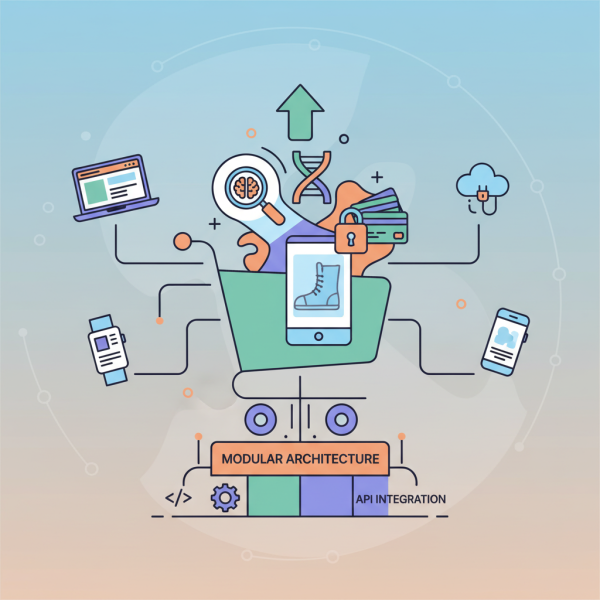
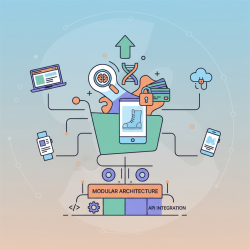
Modular Architecture: Breaking down the e-commerce system into smaller, independent, and interchangeable modules allows for greater flexibility, easier maintenance, and scalability when adding or updating features.
API-First Approach: Designing and building APIs before developing user interfaces ensures that all functionalities are exposed through a well-defined interface, making it easier to integrate with various front-end platforms and third-party services.
Headless Commerce: Decoupling the front-end presentation layer from the back-end e-commerce engine provides unparalleled flexibility. This allows businesses to use best-of-breed front-end technologies to create highly customized experiences on any device or channel, while the back-end handles core commerce logic.
Robust Testing and Quality Assurance: Comprehensive testing across all platforms, including unit, integration, performance, and user acceptance testing, is vital to ensure stability, functionality, and a flawless user experience.
Leveraging Cloud-Native Solutions: Utilizing cloud platforms and services offers scalability, reliability, and access to advanced tools (e.g., managed databases, AI services) that can accelerate development and deployment of complex features.
Dedicated Development Teams: Assigning specialized teams for different aspects of the platform or feature sets can streamline development, foster expertise, and improve communication, leading to more efficient implementation.
Summary
The journey towards an advanced e-commerce platform with complex cross-platform functionalities is a strategic imperative for modern businesses. It moves beyond basic transactional capabilities to deliver rich, personalized, and seamless customer experiences. While the implementation presents significant challenges in API integration, data synchronization, performance, and security, adopting strategies like modular architecture, an API-first approach, and headless commerce can pave the way for successful deployment. By focusing on these core principles, e-commerce businesses can build resilient, scalable, and highly engaging platforms that meet the evolving demands of the digital consumer and ensure long-term competitive advantage.
Comprehension questions
 Why are basic e-commerce functionalities no longer sufficient for modern businesses?What are some key advanced features e-commerce platforms should consider implementing?What are the primary challenges encountered when implementing complex features across multiple platforms?Describe an API-first approach and how it aids in successful cross-platform e-commerce functionality implementation.
Community Poll
Next Lesson

Course Contents : WordPress.org vs. WordPress.com
- >> 7.
 Ecommerce Evolution and Complex Features