Scalability and Performance Optimization Differences
- -->> 6. Scalability and Performance Optimization Differences
What you'll learn
 Domain Specific StrategiesResource Allocation DifferencesOptimization TechniquesMission vs. Profit Driven Goals
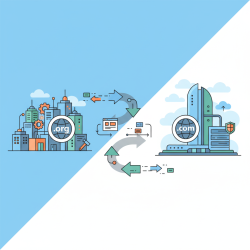
In the digital landscape, the success of any website, regardless of its underlying purpose, hinges significantly on its scalability and performance. While the technical principles for optimizing these aspects are universal, the strategies employed often diverge based on a website's domain type – specifically, .org versus .com. These two top-level domains typically represent fundamentally different organizational goals, resource availability, and target audiences, leading to distinct approaches in how they tackle the challenges of handling traffic, delivering content swiftly, and ensuring a robust user experience.
Understanding the Core Objectives: .com vs. .org
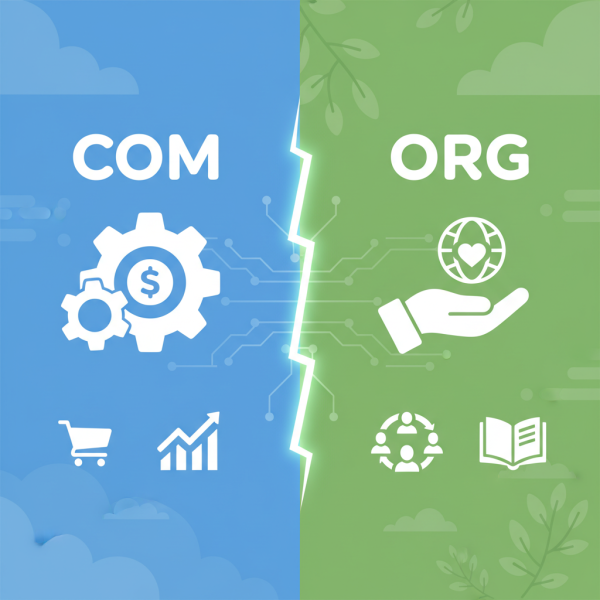
The distinction between .com and .org extends beyond just their domain suffix; it delves into their very mission. A .com website generally represents a commercial entity, focusing on profit generation, sales, marketing, and business growth. Its performance directly correlates with revenue, user acquisition, and customer satisfaction, making speed and uptime paramount for conversions and brand reputation.
Conversely, a .org website typically belongs to a non-profit organization, charity, educational institution, or community group. Its primary objectives revolve around information dissemination, advocacy, fundraising, community building, and delivering its mission-driven content. For .org sites, performance translates to broader reach, effective communication of their cause, fostering trust, and facilitating donations or volunteer engagement. While revenue isn't the direct driver, the ability to operate efficiently and effectively is crucial for their impact.
Common Ground in Performance Optimization
Despite their differing objectives, both .com and .org websites share a foundational need for robust performance and scalability. Basic web performance best practices are universally applicable. Both types of sites benefit from:
- Fast loading times to retain user attention.
- Responsive design for optimal viewing across various devices.
- Efficient server-side processing and database queries.
- Optimized images and media to reduce page weight.
- Effective caching mechanisms.
- Utilization of Content Delivery Networks (CDNs).
- Strong security measures to protect data and user trust.
The core methodologies for achieving these, such as minimizing HTTP requests, compressing assets, and leveraging browser caching, remain consistent across the board.
Scalability Strategies for .com Websites
.com entities often face the challenge of handling unpredictable traffic spikes driven by marketing campaigns, product launches, or seasonal sales events. Their scalability strategies are typically geared towards maximizing uptime and responsiveness under heavy load to prevent lost sales or damaged brand perception. Key approaches include:
- Cloud Elasticity: Leveraging public cloud providers like AWS, Azure, or Google Cloud for auto-scaling infrastructure that can automatically provision and de-provision resources based on real-time demand. This ensures capacity matches traffic without over-provisioning during quiet periods.
- Advanced Load Balancing: Distributing incoming network traffic across multiple servers to ensure no single server is overwhelmed, improving overall responsiveness and availability. This often involves sophisticated application-level load balancers.
- Database Sharding and Replication: For high-transaction systems, databases are often scaled horizontally through sharding (splitting data across multiple databases) and vertically through replication (creating copies of the database for read operations).
- Aggressive Caching: Implementing multi-layered caching strategies, including CDN caching, proxy caching, object caching, and database query caching, to serve content rapidly without hitting backend servers unnecessarily.
- Microservices Architecture: Decomposing large applications into smaller, independent services that can be developed, deployed, and scaled independently, offering greater flexibility and resilience.
- Performance Testing: Rigorous load testing and stress testing are routinely conducted to identify bottlenecks and validate the system's ability to handle anticipated peak loads.
Investment in advanced infrastructure and performance tools is often justified by the direct impact on revenue and competitive advantage.
Scalability Strategies for .org Websites
.org websites, while also needing to handle traffic, often operate within tighter budget constraints and have different primary goals. Their scalability strategies emphasize cost-effectiveness, reliability, and efficient resource utilization to sustain their mission. Important considerations include:
Rather than explosive growth, .org sites prioritize consistent availability, especially during critical fundraising periods or awareness campaigns. They focus on:
- Cost-Effective Hosting: Opting for reliable, scalable hosting solutions that offer good value, such as managed WordPress hosting for content-heavy sites, or leveraging free/discounted services offered to non-profits by cloud providers.
- Optimized Content Delivery: Ensuring their educational materials, advocacy messages, and fundraising pages are delivered quickly and reliably to a global audience. This might involve utilizing free CDN tiers or community-supported CDN options.
- Efficient Platform Choices: Selecting robust, open-source content management systems (CMS) like WordPress or Drupal, which have large communities, extensive documentation, and a wealth of plugins for performance optimization.
- Strategic Caching: Implementing server-side caching and browser caching effectively to reduce server load for static and frequently accessed dynamic content, often with less complex infrastructure than .com counterparts.
- Community Support: Relying on community forums, open-source contributions, and volunteer expertise for development, maintenance, and performance tuning, which can be a significant asset in managing costs.
- Planned Capacity: While not always requiring the rapid elasticity of .coms, .orgs must plan for predictable spikes during major events like annual campaigns or disaster relief efforts, ensuring their hosting can temporarily accommodate increased load without breaking the bank.
The emphasis is on sustainable solutions that maximize impact given limited financial resources, ensuring the mission is not hindered by technical limitations.
Universal Performance Optimization Techniques with Nuances
Many performance optimization techniques are universal, but their implementation and prioritization may differ:
- Content Delivery Networks (CDNs): Both benefit immensely. .com sites might invest in premium CDNs with advanced features like WAF (Web Application Firewall) integration and comprehensive analytics. .org sites might prioritize cost-effective or free CDN services, focusing on global content distribution for static assets.
- Caching Strategies: Crucial for both. .com sites often employ more sophisticated multi-layered caching (e.g., Varnish, Redis, Memcached) to handle high-volume dynamic content. .org sites might focus on robust server-side caching (e.g., via their CMS) and browser caching to minimize server load.
- Database Optimization: Essential for responsive applications. .coms with high transaction volumes might invest in dedicated database administrators, complex indexing strategies, and advanced database clusters. .orgs might focus on efficient query design, regular database maintenance, and ensuring their hosting provides adequate database resources.
- Image and Video Optimization: Fundamental for user experience. Both types of sites need to compress images, use modern formats (like WebP), and lazy-load media. .coms might use advanced image CDNs with real-time optimization, while .orgs might rely on CMS plugins and manual optimization to manage costs.
- Code Efficiency: Clean, optimized HTML, CSS, and JavaScript is vital. .coms often employ rigorous testing and continuous integration/continuous deployment (CI/CD) pipelines to ensure code quality. .orgs might leverage well-maintained themes and plugins from their CMS ecosystem to ensure code efficiency without extensive custom development.
Monitoring and Continuous Improvement
Regular monitoring is indispensable for both domain types. Performance monitoring tools, analytics, and uptime alerts help identify bottlenecks and ensure continuous availability. .coms may invest in enterprise-grade Application Performance Monitoring (APM) tools that provide deep insights into every layer of their stack. .orgs might utilize free analytics tools, basic uptime monitors, and community-supported logging solutions to keep track of their site's health and user engagement.
Ongoing maintenance, including software updates, security patches, and periodic performance audits, is critical to sustaining optimal performance and addressing potential vulnerabilities for both commercial and non-profit websites.
Summary
While the technical underpinnings of scalability and performance optimization are largely universal, the strategic approaches for .org and .com websites are shaped by their distinct objectives, resource availability, and risk profiles. Commercial entities prioritize revenue-driven performance, investing heavily in elastic, high-capacity infrastructure to manage variable demand and maximize conversions. Non-profit organizations focus on mission delivery, seeking cost-effective, reliable solutions that ensure consistent availability and broad reach, often leveraging community resources and open-source platforms. Understanding these divergent priorities is key to crafting effective optimization strategies that align with each domain's unique goals, ultimately ensuring a robust and impactful online presence.
Comprehension questions
 What are the fundamental differences in organizational goals between .com and .org websites that influence their scalability strategies?List three common performance optimization techniques that are universally applicable to both .com and .org websites.How do .com websites typically leverage cloud services for scalability, and why is this approach beneficial for their objectives?In what ways do budget constraints often influence the scalability and performance optimization choices made by .org websites?
Review Quiz
Next Lesson
Course Contents : WordPress.org vs. WordPress.com
- >> 6.
 Scalability and Performance Optimization Differences