Minification and Bundling for Web Performance
- -->> 11. Minification and Bundling for Web Performance
What you'll learn
 Introduction to Web Performance OptimizationUnderstanding Minification TechniquesThe Role of BundlingBenefits and Implementation of Optimization
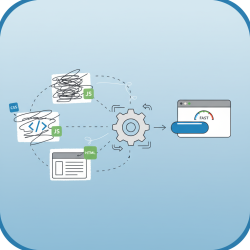
Two fundamental techniques in optimizing web performance are minification and bundling. These processes work hand-in-hand to reduce the amount of data transferred over the network and the number of requests a browser makes to a server. By understanding and implementing these strategies, developers can significantly enhance a website's speed, responsiveness, and overall user experience.
What is Minification?
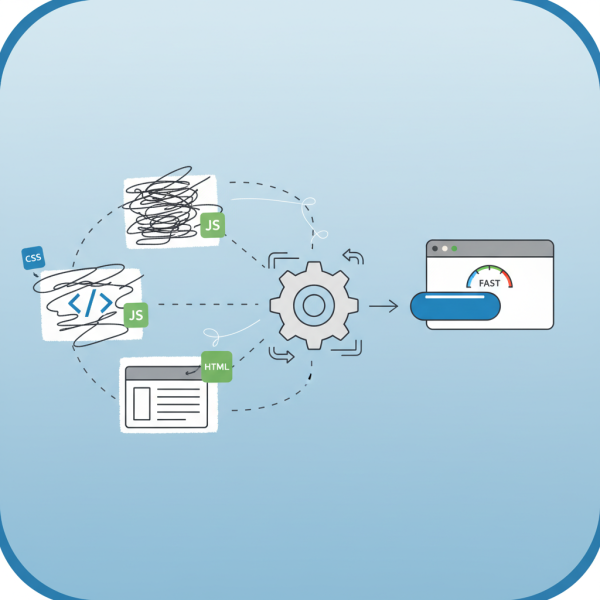
Minification is the process of removing all unnecessary characters from source code without changing its functionality. These unnecessary characters typically include whitespace characters (spaces, tabs, newlines), comments, and sometimes block delimiters (though care must be taken with these). The goal is to reduce the file size of the code, making it smaller to transmit over the network and faster for the browser to parse and execute.
Minifying CSS
CSS files often contain a significant amount of whitespace, comments, and redundant declarations that are not essential for browser rendering. Minifying CSS involves stripping these elements away. For instance, removing newlines between rules and collapsing multiple spaces into a single space, or even removing the last semicolon in a block, can shave off kilobytes from large stylesheets.
For example, a CSS rule like:
.container { display: flex; /* Flexbox container */ margin: 10px 20px; padding: 5px; }
Could be minified to:
.container{display:flex;margin:10px 20px;padding:5px}
Tools like CSSNano or clean-css are commonly used in build processes to automate this task, ensuring that all CSS files delivered to the client are as lean as possible.
Minifying JavaScript
JavaScript code, especially large libraries and application scripts, can greatly benefit from minification. Similar to CSS, JavaScript minification removes comments and excessive whitespace. Additionally, it often performs more advanced optimizations like renaming local variables and function names to shorter equivalents, dead code elimination, and optimizing expressions. These aggressive optimizations can lead to substantial file size reductions.
Consider a simple JavaScript function:
function calculateSum(a, b) { // This function adds two numbers let result = a + b; return result; }
After minification, it might look like:
function calculateSum(a,b){var c=a+b;return c}
Popular JavaScript minifiers include UglifyJS, Terser, and Google Closure Compiler. These tools are crucial for ensuring production-ready JavaScript is delivered efficiently.
Minifying HTML
While often overlooked, HTML can also be minified. HTML minification involves removing whitespace between tags, comments, and other non-essential characters within the HTML document structure. While the gains might not be as dramatic as with CSS or JavaScript, every byte saved contributes to faster page load times, especially for pages with complex structures or inline scripts/styles.
Tools like HTMLMinifier can be integrated into build pipelines to automate this process.
What is Bundling?
Bundling is the process of combining multiple separate files (like several JavaScript files or multiple CSS files) into a single larger file. The primary motivation behind bundling is to reduce the number of HTTP requests a browser has to make to load all the necessary assets for a webpage. Every HTTP request carries a certain overhead, including DNS lookups, TCP handshake, and SSL negotiation. By combining files, this overhead is incurred only once, leading to faster overall page load times.
Benefits of Minification and Bundling
The combined power of minification and bundling offers several significant advantages:
- Faster Page Load Times: Reduced file sizes mean quicker downloads, and fewer HTTP requests mean less network overhead, both contributing to a snappier user experience.
- Reduced Bandwidth Usage: Smaller files consume less bandwidth, which can be beneficial for users on limited data plans and can reduce server costs for website owners.
- Improved SEO: Search engines like Google consider page speed a ranking factor. Faster websites are generally favored, leading to better visibility in search results.
- Enhanced User Experience: Users are less likely to abandon a site that loads quickly. A smooth, fast experience keeps visitors engaged.
- Simplified Deployment: Managing fewer, optimized files can simplify deployment processes in some cases, although the build setup itself becomes more complex.
Implementing Minification and Bundling
Implementing these techniques usually involves integrating them into a website's build process. Modern web development often uses task runners or module bundlers to automate these steps. Here are common approaches:
- Task Runners (e.g., Gulp, Grunt): These tools allow developers to define tasks, such as minifying CSS files, minifying JavaScript files, and concatenating them. They can watch for file changes and automatically re-run tasks.
- Module Bundlers (e.g., Webpack, Rollup, Parcel): These are powerful tools that not only bundle and minify but also handle dependency resolution, code splitting, and various other asset transformations. They are particularly popular in single-page application (SPA) development with frameworks like React, Angular, and Vue.js.
- Content Delivery Networks (CDNs): While not directly a minification/bundling tool, CDNs often serve minified and bundled versions of common libraries (like jQuery). Using a CDN for these assets can further reduce load times by serving files from a geographically closer server.
Considerations and Best Practices
While minification and bundling offer clear benefits, there are considerations. Aggressive minification without proper testing can sometimes introduce subtle bugs, especially in JavaScript. It's crucial to have robust testing in place to catch any regressions. Also, while bundling reduces HTTP requests, creating a single giant bundle might not always be ideal. For very large applications, code splitting (a feature offered by module bundlers) can break the application into smaller, on-demand loaded bundles, providing a balance between fewer requests and efficient resource loading.
Summary
Minification and bundling are indispensable practices for modern web performance optimization. Minification focuses on reducing the size of individual CSS, JavaScript, and HTML files by removing superfluous characters and code. Bundling, on the other hand, combines multiple files into fewer, larger ones to minimize the number of HTTP requests made by the browser. Together, these techniques drastically reduce network overhead, accelerate page load times, improve user experience, and positively impact search engine rankings, making them essential components of any efficient web development workflow.
Comprehension questions
 What is the primary goal of minification in web development?How does bundling contribute to improved web performance?Name three types of files that can benefit from minification according to the article.What are two significant benefits of implementing both minification and bundling?
Review Quiz
Next Lesson

Course Contents : Website Speed Performance Optimization
- >> 11.
 Minification and Bundling for Web Performance